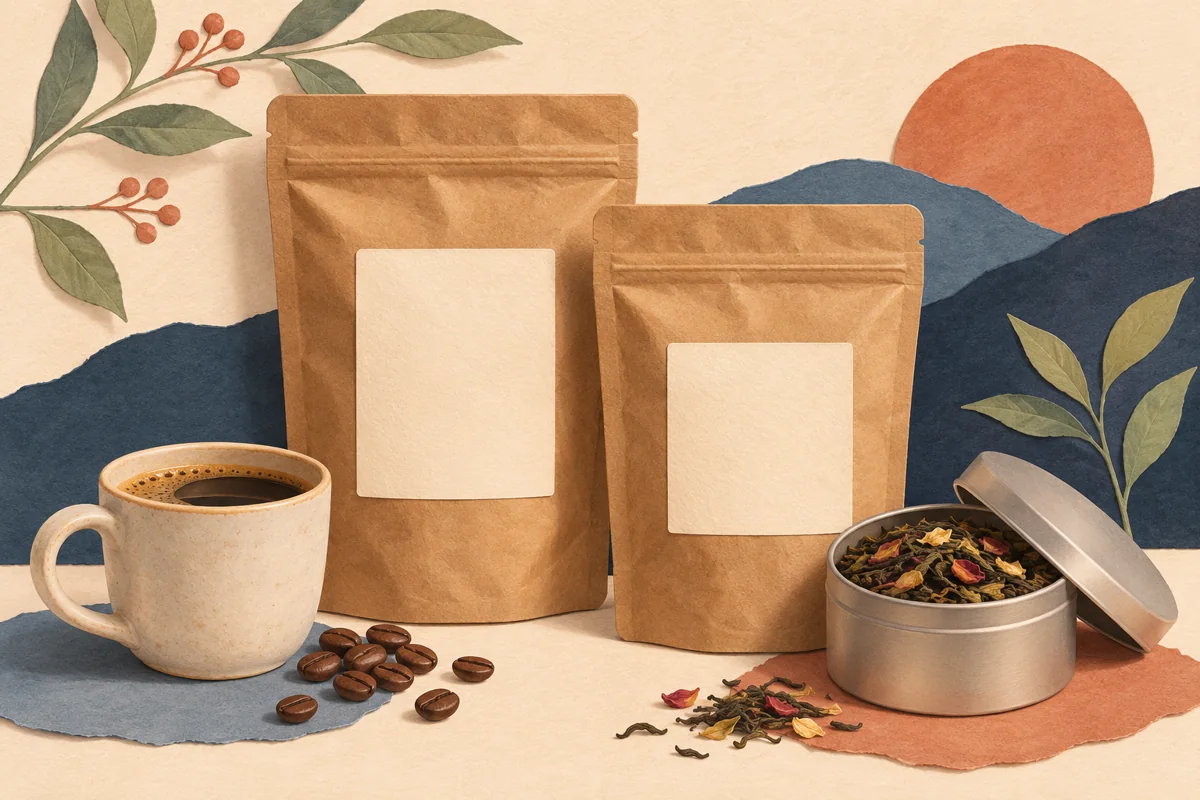
Botanical bath tea can be presented as a loose blend, filled sachets or a gift set with separate accessories. Those formats create different information and assembly needs. The packaging should tell the buyer what is inside and distinguish a bath product from an edible tea without depending on decorative leaves alone.
01
Make the supplied format explicit
Write a plain contents statement before designing the label. A pack of filled sachets is different from a loose blend supplied with empty bags, and both differ from a blend sold without accessories. Match the illustration and wording to what the customer actually receives so the front image does not imply additional items.
Lay every included component on the packing table and give it a position in the proposed package. If a card or accessory is optional, record which product variant includes it. Avoid using food-style presentation as the only cue for a bath product; a direct product-type name helps the buyer understand the package immediately.
02
Compare the loose and sachet layouts
For an illustrative two-format range, call the products Botanical Bath Tea — Loose Blend and Botanical Bath Tea — Filled Sachets. Keep the shared brand treatment, but reserve enough space for the format line. The customer should not have to compare tiny photographs to discover that the two packs contain different things.
Measure the actual filled pouch or carton after its closure is complete. A sachet stack may create a thicker front than an empty package suggests. Position the main label where folds and zipper movement do not obscure the format. Put the verified preparation or use wording on a readable companion panel rather than compressing it into a decorative badge.
| Format | Description to make clear |
|---|---|
| Loose blend | What is supplied alongside the blend |
| Filled sachets | Actual sachet count and identity |
| Gift set | Every included component and its position |
03
Check opening, identification and repacking
Open the sample and compare the visible contents with the outer statement. Confirm that any included sachets, accessory bags or instructions are easy to identify. Use only the maker’s approved instructions for the formulation and format; this packaging exercise does not establish ingredient suitability, benefits or a preparation method.
Keep one approved pack and a photo of its contents arrangement. When the supplied count or accessory changes, update the outer label, product listing and packing reference together. Review editable template formats for the panels you need, then check their sizes and editable wording before adapting them to a bath tea range.
BEFORE YOUR NEXT STEP
Your practical checklist
- Name the actual supplied format.
- Distinguish bath use from edible tea.
- Measure the filled and closed pack.
- Match the listing to the contents key.
Questions & answers
Can the label just say botanical tea?+
A vague name can make the product harder to identify. Use the maker’s approved product-type wording and make the intended bath-product identity clear in the layout.
Should I print a preparation recipe from another maker?+
No. Keep directions specific to the actual formula and supplied format. Obtain approved wording from the responsible maker before designing the instruction area.
Sources & further reading
Official references for the technical points in this guide. Check current specifications before production.