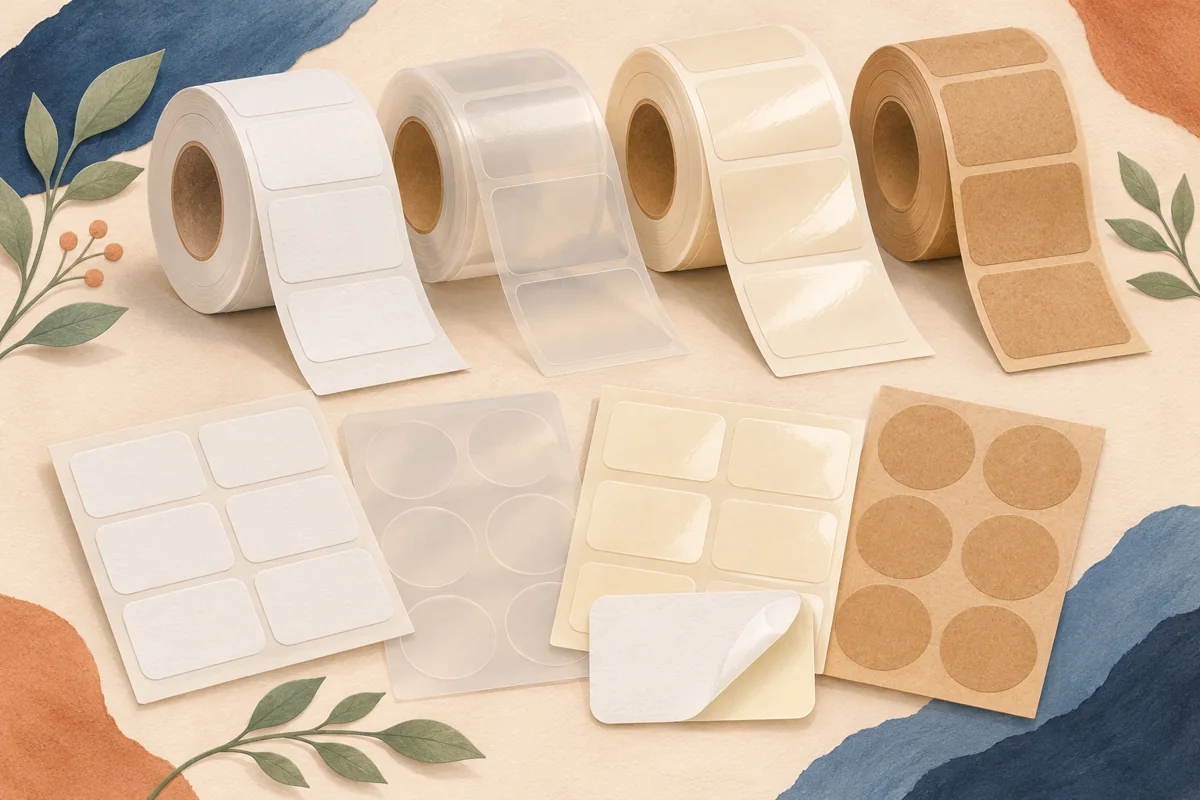
Two suppliers may recommend different films for the same jar without either recommendation being a mistake. Polyester and BOPP name the face material, while the finished label also depends on its adhesive, print and protective finish. Make a comparison that keeps those decisions visible instead of choosing the more impressive abbreviation.
01
Separate the film family from the finished label
PET is a polyester, while BOPP is biaxially oriented polypropylene. Avery explains that its PET and BOPP offerings also reflect different sheet and roll requirements. That is a useful starting distinction, not a universal rule that every supplier offers each film in the same formats or with the same performance.
Build a comparison sheet with separate rows for face material, adhesive, topcoat, supplied format and printing method. Copy the supplier’s exact product reference into the first column. Two products described as clear film may have different adhesives or coatings, so a short marketing name is not enough to identify the sample you approved.
02
Compare the purchase and printing workflow
Decide whether you need blank printable sheets, professionally printed rolls or another supplied format. Check compatibility with the actual printer or applicator before discussing appearance. A film label sold for a commercial printing process should not be assumed suitable for a home inkjet or laser printer simply because its size fits the tray.
For an illustrative skincare jar, compare a printable PET sheet with a supplier-printed BOPP roll using the same front label. Record who performs the printing, how small quantities are handled and which files the provider needs. Keep those operational differences separate from the question of which sample looks clearer on the jar.
| Comparison field | Record for each candidate |
|---|---|
| Supply format | Blank sheet or finished printed roll |
| Complete build | Film, adhesive and finish reference |
| Package result | Readability and adhesion on the actual jar |
03
Make a controlled package comparison
Apply each candidate according to its supplier instructions to matching clean containers. Use the same label dimensions and artwork so a larger type size does not win a material comparison by accident. Mark the sample codes underneath the containers and photograph them under the lighting used for your product listing.
Then review the handling relevant to this product: opening the jar, gripping the body or wiping an incidental splash according to the material specification. Note what happened to the print, film edge and bond separately. These are observations about the chosen samples and conditions, not proof that every PET or BOPP label behaves identically.
04
Approve a reproducible specification
Ask the provider to identify the winning construction on the quotation and order confirmation. Keep the material code, finish and adhesive together with the approved artwork revision. If a later quote substitutes a different film or coating, compare a new sample rather than relying on the old abbreviation in your notes.
An editable Canva layout helps organize your brand and wording before this production decision. It does not include physical stock or establish a material rating. Preview the available layout dimensions, then use the printer’s approved file settings and your documented sample result to prepare the final order.
BEFORE YOUR NEXT STEP
Your practical checklist
- Record the complete construction code.
- Confirm the supply and print format.
- Compare identical artwork on matching jars.
- Keep the approved sample with the reorder record.
Questions & answers
Is PET always better than BOPP?+
No single film name answers the whole packaging question. Compare the available construction, printing workflow and actual-container result for your intended use.
Can I run any film label through my home printer?+
Use only stock specified for that printer type. Commercially printed or coated materials can have different requirements from blank home-printable sheets.
Sources & further reading
Official references for the technical points in this guide. Check current specifications before production.