A spice jar that reads beautifully on an open shelf may be hard to identify inside a drawer. Design the label system around where the jars live and how you refill them. Clear names and consistent placement make the collection easier to use and simpler to expand.
01
Choose the view before the shape
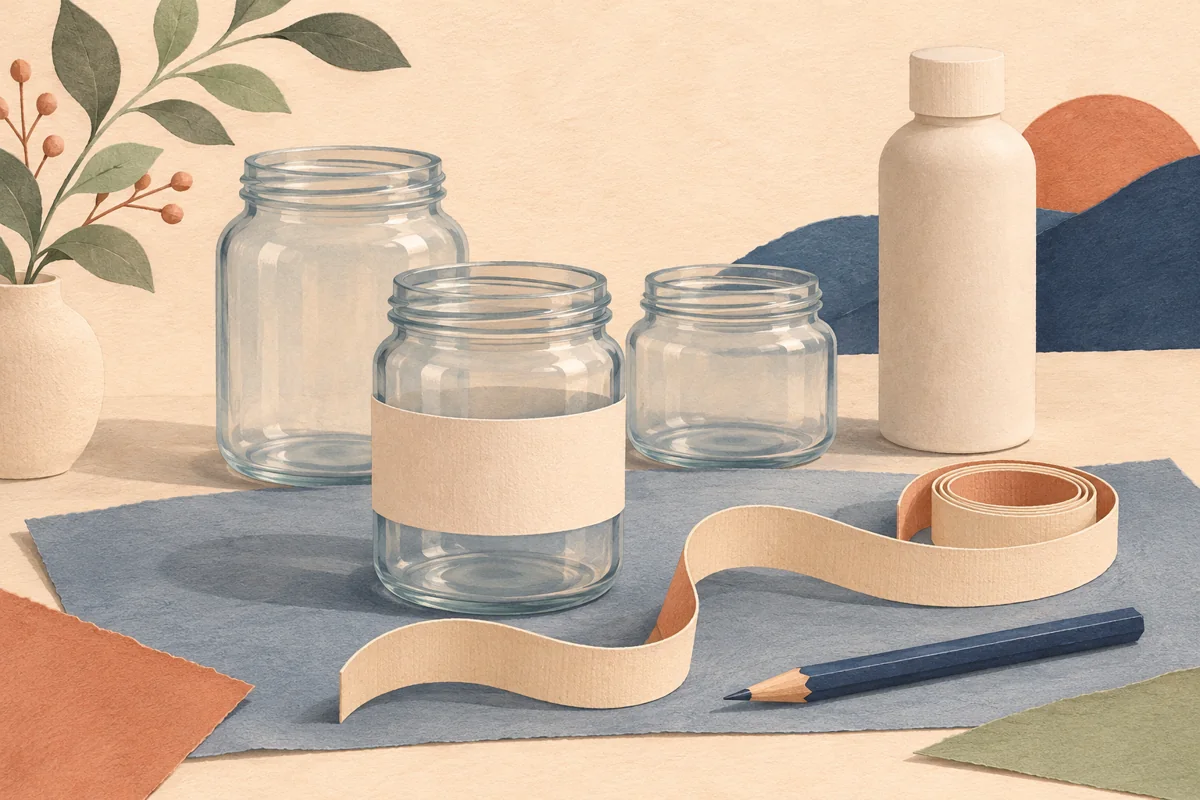
Put a few empty jars in their intended shelf, drawer or angled rack. Look at them from the position where someone normally chooses a spice. Mark the portion that is visible without moving neighboring jars. That determines whether the main name belongs on the front, lid or both.
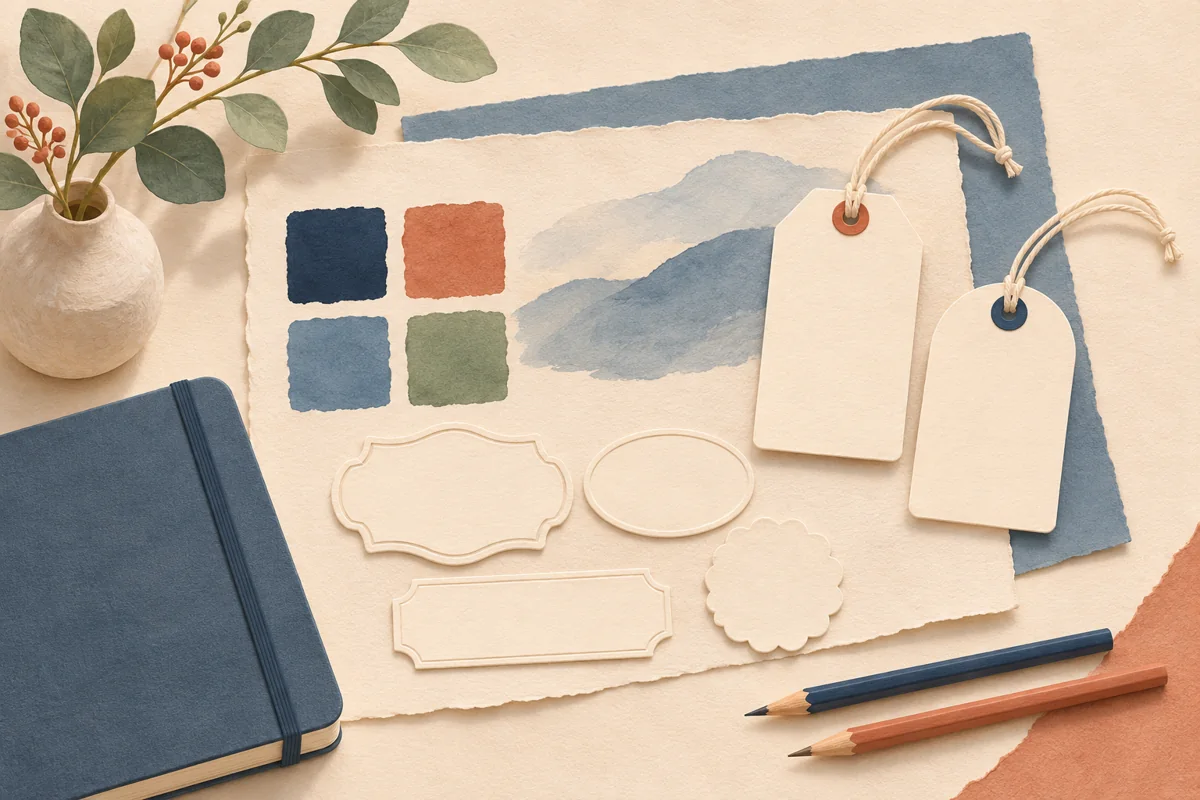
On a shelf with two rows, lid names can help identify the jars at the back. In a drawer, a large front panel may be hidden completely. Compare a round lid proof with a short front rectangle and decide which information each surface should carry.
02
Make similar names easy to distinguish
Use complete names for spices that could be confused. Ground cinnamon and cinnamon sticks need a visible form cue if both appear in the range. For blends, choose a recognizable blend name and place an accurate description in a supporting area when needed.
Keep the name in the same position and use a controlled accent for groups such as herbs, whole spices and blends. Make sure the words remain enough to identify the jar when the color is hard to see. Test the longest name alongside a short one before finalizing the type size.
| Illustrative jar name | Extra distinction | Label check |
|---|---|---|
| Cinnamon | Ground or sticks | Form stays visible beside the main name |
| Chili blend | Specific blend identity | Does not look identical to a single spice |
| Rosemary | Whole or ground if relevant | Long words fit without crowding the border |
03
Measure the jars you will refill
Compare the usable front and lid areas on every jar model. A new refill container can have a wider shoulder or a smaller lid inset even at similar capacity. Keep your approved dimensions by model so adding a jar does not turn into a guess.
Use a paper proof on the jar, then open the lid and handle it the way you would during cooking or packing. Keep the label clear of the screw thread and curved base. Ask the supplier about the expected handling and select stock suitable for the actual surface.
04
Keep variable details out of the fixed design
For a home pantry, you may want a separate refill record connected to the source package. For products sold to others, use accurate product details and check the requirements for the actual item and market. Keep any changing information in a planned area so the name panel stays consistent.
Save a master naming list with the approved spelling and jar model. Add new variants from that list, then print a full-size proof before the next batch. When selecting editable Canva artwork, compare the included layouts with your jar measurements and plan any adjustments before ordering print materials.
BEFORE YOUR NEXT STEP
Your practical checklist
- Check the normal shelf or drawer view.
- Distinguish similar spices in words.
- Measure each jar and lid model.
- Keep changing details separate from fixed artwork.
Questions & answers
Do spice jars need front and lid labels?+
Use both when the jars are viewed from different angles. One well-placed name may be sufficient for a single clear viewing position.
Can I use one template for every spice name?+
A shared layout can work well. Test the longest names and keep a consistent rule for forms such as whole or ground.
Sources & further reading
Official references for the technical points in this guide. Check current specifications before production.