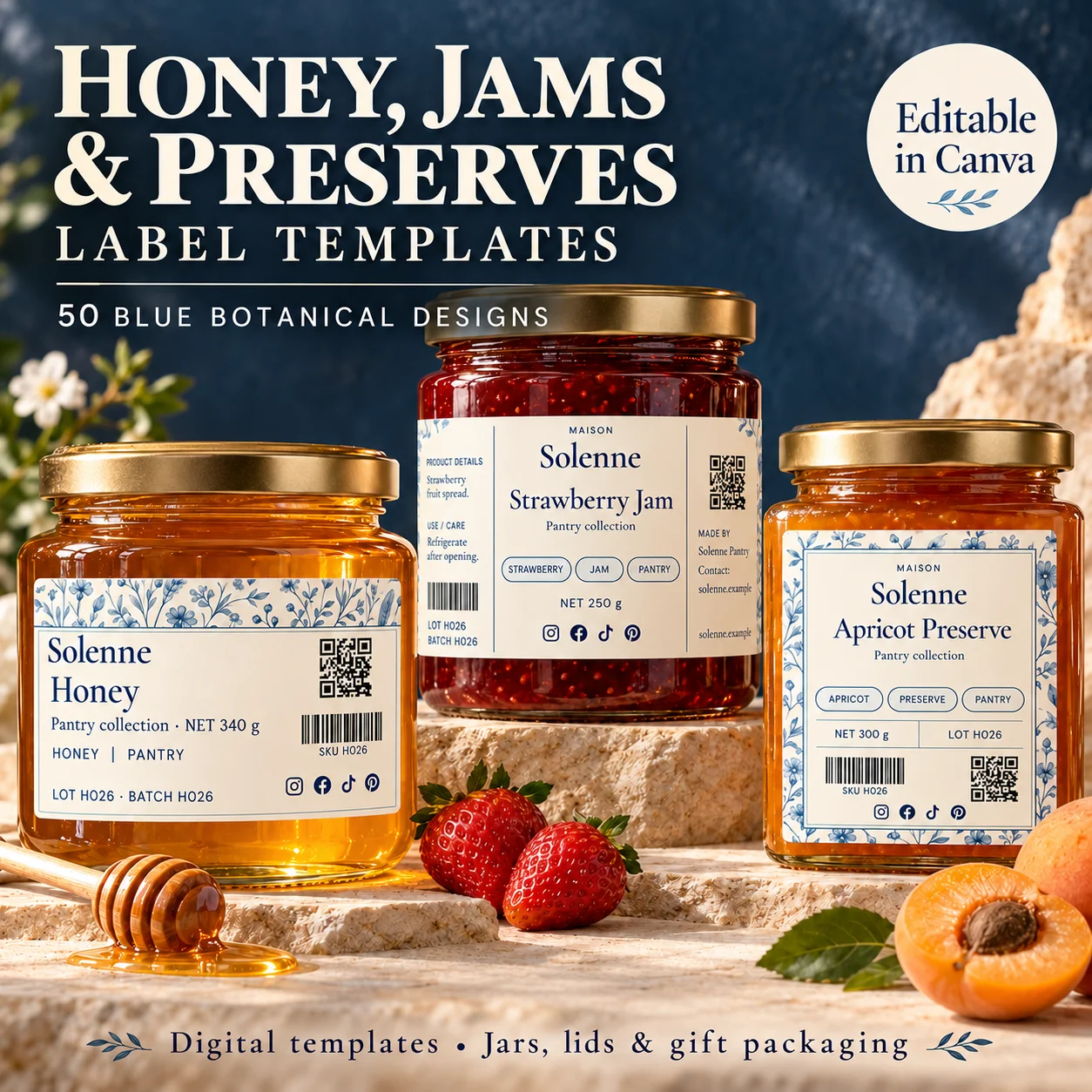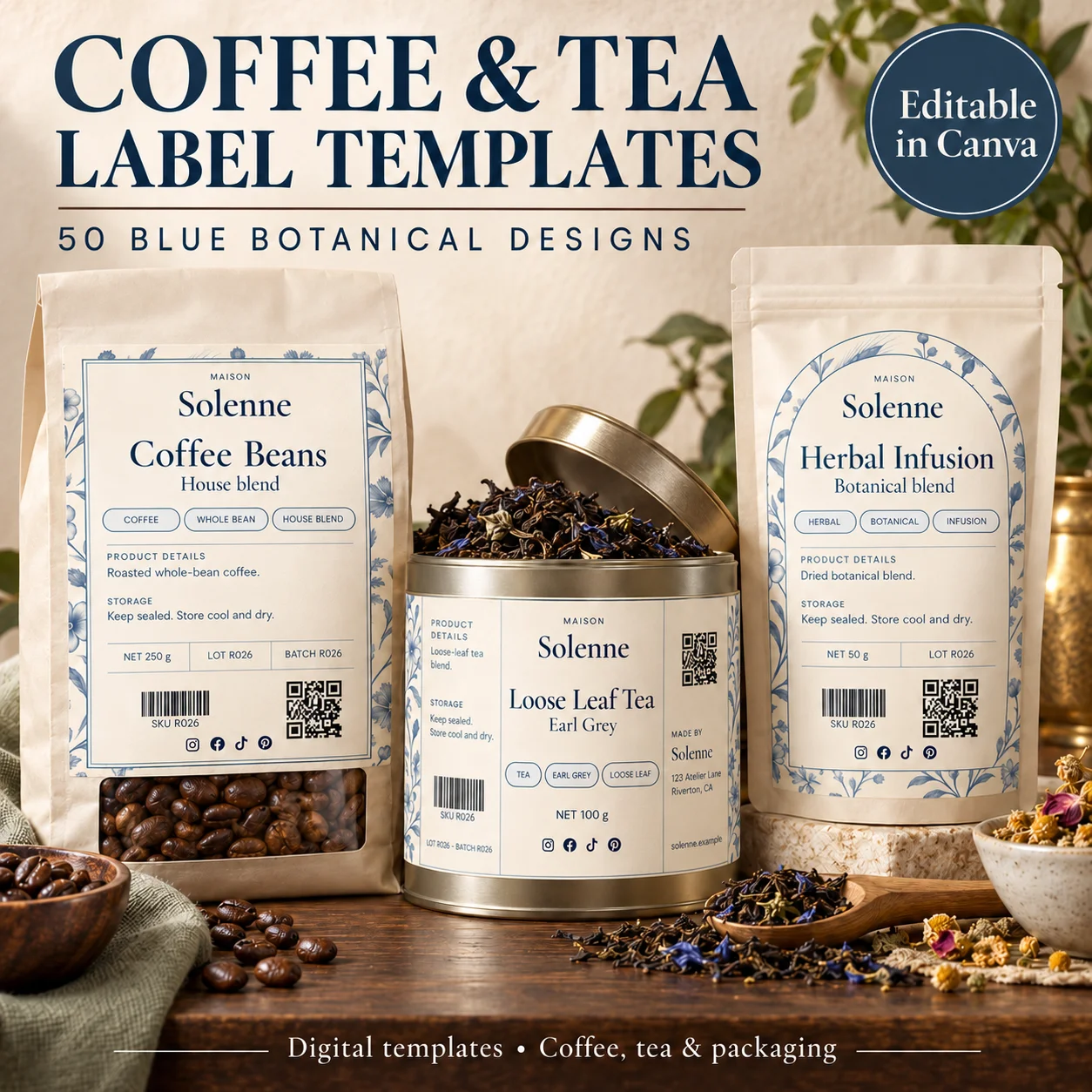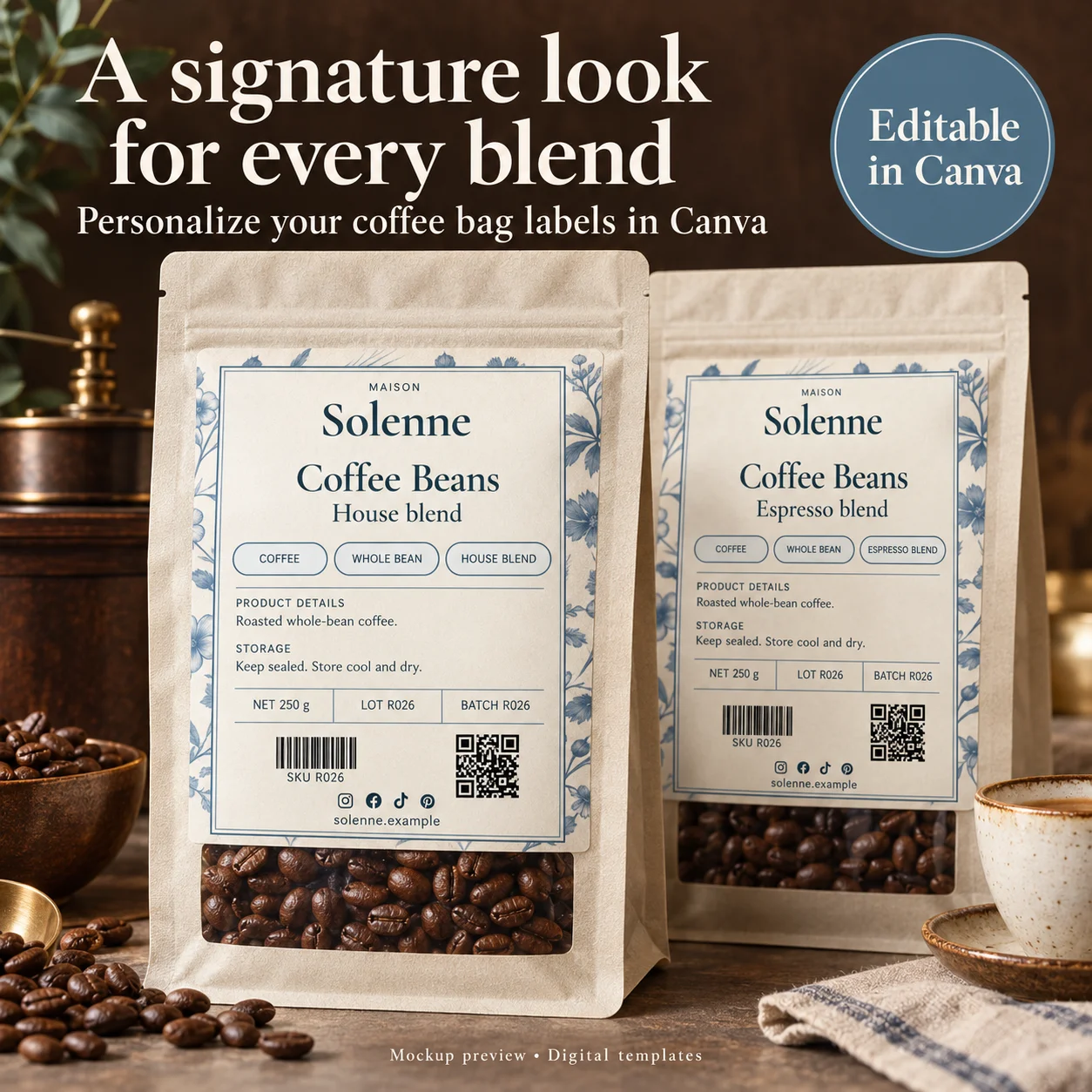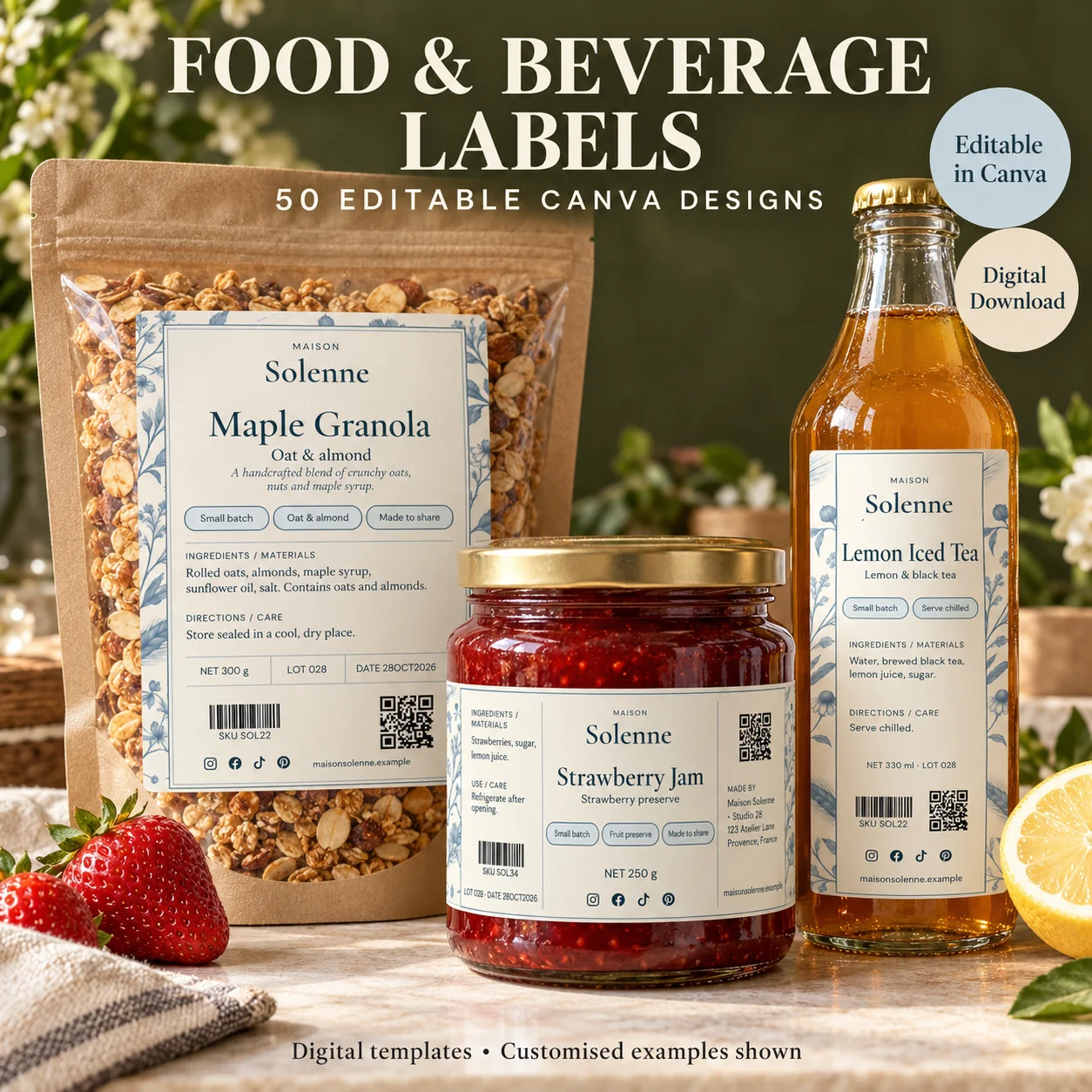
A food label has a demanding job: it must introduce the product clearly while making room for accurate information. You can make that job easier by separating the content review from the visual design and then bringing both together in a full-size proof. This checklist is a way to organize the artwork process, not a substitute for the requirements that apply to the food and the place where it is sold.
01
Collect the final text before sizing the design
Create a text document for each product and version. Include the information supplied by your recipe, manufacturing and labeling review processes, rather than borrowing text from an attractive example. Assign responsibility for checking the facts so the designer is not silently guessing at missing details.
Use the text document to estimate space. If the information panel is much longer than expected, address that before ordering packaging. A larger label, a different panel arrangement or a different container may be more practical than trying to compress everything after the visual style has been approved.
02
Plan the package as a group of surfaces
Place paper mockups on the actual filled package. Identify what the customer sees first and where the supporting information can be read comfortably. Note folds, seams, opening areas and curves that may interfere with placement. A label that works on a jar may need a different arrangement on a pouch.
Decide what each separate sticker or panel contributes. Repeating the same crowded block everywhere is rarely helpful. Keep the product identity visible and preserve a deliberate location for information that must remain together or appear in a particular place under the rules that apply.
03
Make variants and quantities hard to confuse
Use a consistent visual position for the product and variant names. Put the range together and check whether a shopper can distinguish similar packages without reading every small line. Optional color cues should reinforce a readable name rather than replace it.
When duplicating a label, compare every field with the correct product record. Check the exported front and back together. A new flavor name paired with old supporting information is a production error even if the artwork is beautifully aligned. Keep approved exports separate from drafts.
04
Use current guidance for the destination market
Food-label rules are specific to products and jurisdictions. For U.S. sales, FDA’s Food Labeling Guide page flags sections that need to be read alongside newer allergen and nutrition resources. That is a reason to use current official information, not an old downloaded checklist as the only reference.
Do not treat a visual template as a verified compliance layout. Obtain the appropriate review of your wording, claims, required presentation and any applicable local rules. The design can support clarity, but a decorative border or a familiar-looking information panel does not establish that the package is correct for sale.
05
Proof what will actually be printed
Read the final PDF as well as the editable design. Check that the correct pages were exported and that no sample names, weights or placeholder statements remain. Print at finished size and inspect the smallest text under ordinary lighting. Then apply the label to the intended package.
Give the physical proof a separate pass for material and handling. Consider the storage conditions of the product and ask the supplier which label construction fits them. Record the approved artwork version, stock and package code together so the next run begins from a known setup instead of an uncertain memory.
BEFORE YOUR NEXT STEP
Your practical checklist
- Use a separate approved text document for each product.
- Map information onto the real filled package.
- Check front, back and variant data together.
- Use current official guidance and a suitable market-specific review.
Questions & answers
Can I use the same label on every food product?+
A shared visual style can work, but the text, panel space and requirements can differ. Review each actual product.
Is the product description on my website enough?+
Do not assume online information replaces information required on the physical package. Verify the obligations for the category and market.
The checklist covers artwork organization and proofing. It is not a complete legal food-labeling checklist.
Sources & further reading
Official references for the technical points in this guide. Check current specifications before production.