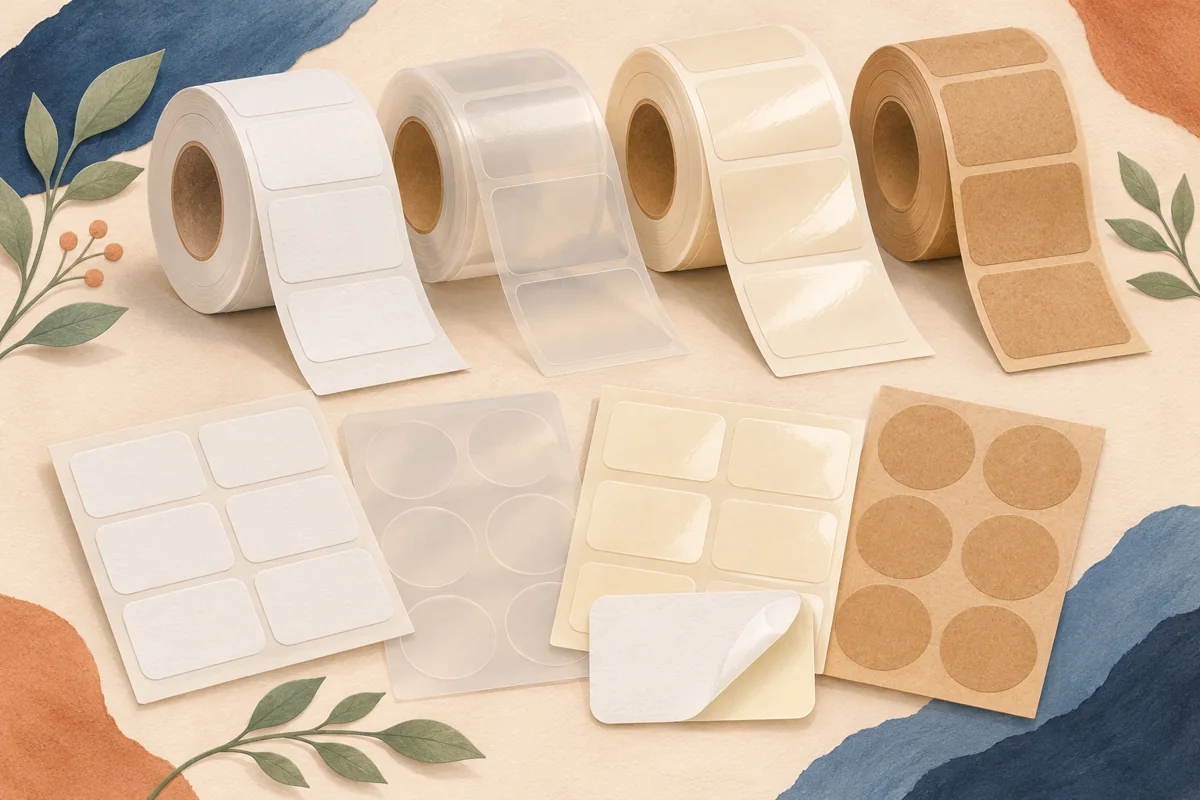
A bottle can look almost rigid when full and change shape substantially as it is emptied. A label chosen from a flat sample card may therefore face a different job on the finished product. When comparing squeezable MDO labels, examine the moving package and the intended label panel together.
01
Map where the bottle changes shape
Start with an assembled bottle, cap and representative contents. Identify the area normally gripped during dispensing and the parts that bend, flatten or return slowly to shape. Keep the closure and bottom seam outside your artwork assumptions. The visible front panel may not be the same area that receives the strongest repeated pressure.
For an illustrative hand-cream bottle, mark a central squeeze zone and compare it with a narrower upper panel. A label spanning the shoulder may encounter a compound curve even before the bottle is squeezed. Sketch these regions on a paper wrap so the print supplier sees the intended placement rather than only a photograph of the empty container.
02
Specify the whole flexible construction
Avery offers MDO film specifically for squeezable containers. Use that product category to ask a focused question: which exact film, adhesive and finish does the provider recommend for this bottle material and movement? Do not assume all materials called squeezable share the same coating, application instructions or approved surfaces.
Tell the supplier whether the pack is clear or opaque, how it is filled and when labels are applied. Ask which appearance options are available within the proposed construction. Keep a material substitution visible in the proof record; changing to a stiffer stock can alter the result even when the artwork and label dimensions remain unchanged.
| Observed condition | Question for the sample review |
|---|---|
| Full bottle | Does the front panel sit smoothly? |
| Partly emptied bottle | Does the artwork remain readable during dispensing? |
| Returned to rest | Do creases or lifting edges remain? |
03
Test the label where the customer holds it
Apply the candidate sample using the provider’s preparation and application instructions. Keep one unhandled comparison pack and use another for a documented dispensing trial. A photograph of an untouched bottle is useful, but it cannot show whether the chosen label placement interferes with grip or develops visible folds during the intended motion.
Observe the printed name, the label body and each edge independently. If the label wrinkles near the shoulder, a placement or outline change may be worth comparing before abandoning the material. If the ink marks while the film stays smooth, discuss the print and finish with the supplier rather than blaming flexibility alone.
04
Make the approval usable at the packing bench
Record the bottle model, label outline and application reference, including the distance from a fixed feature. Keep the sample’s fill condition and handling notes with the approval. When a bottle supplier changes the wall shape or closure, review the package again instead of assuming the previous material recommendation covers the replacement.
Prepare the Canva artwork around the panel that survived the comparison, with important wording away from severe curvature. A digital template supplies an editable layout rather than a squeezable material or a tested packaging system. Check the available formats, then have the final construction and print proof approved for the actual product.
BEFORE YOUR NEXT STEP
Your practical checklist
- Map the bottle’s grip and bending areas.
- Request a complete squeezable-stock specification.
- Compare full and partly emptied packages.
- Record placement as well as the material code.
Questions & answers
Does MDO mean a label can stretch around any shape?+
No. The complete construction and the bottle geometry determine suitability. Ask the supplier to review the actual container and validate a sample in the intended position.
Should I make the label cover the whole squeezable panel?+
Compare practical outlines rather than maximizing coverage automatically. A smaller or differently placed label may keep the product name clearer while the bottle moves.
Sources & further reading
Official references for the technical points in this guide. Check current specifications before production.