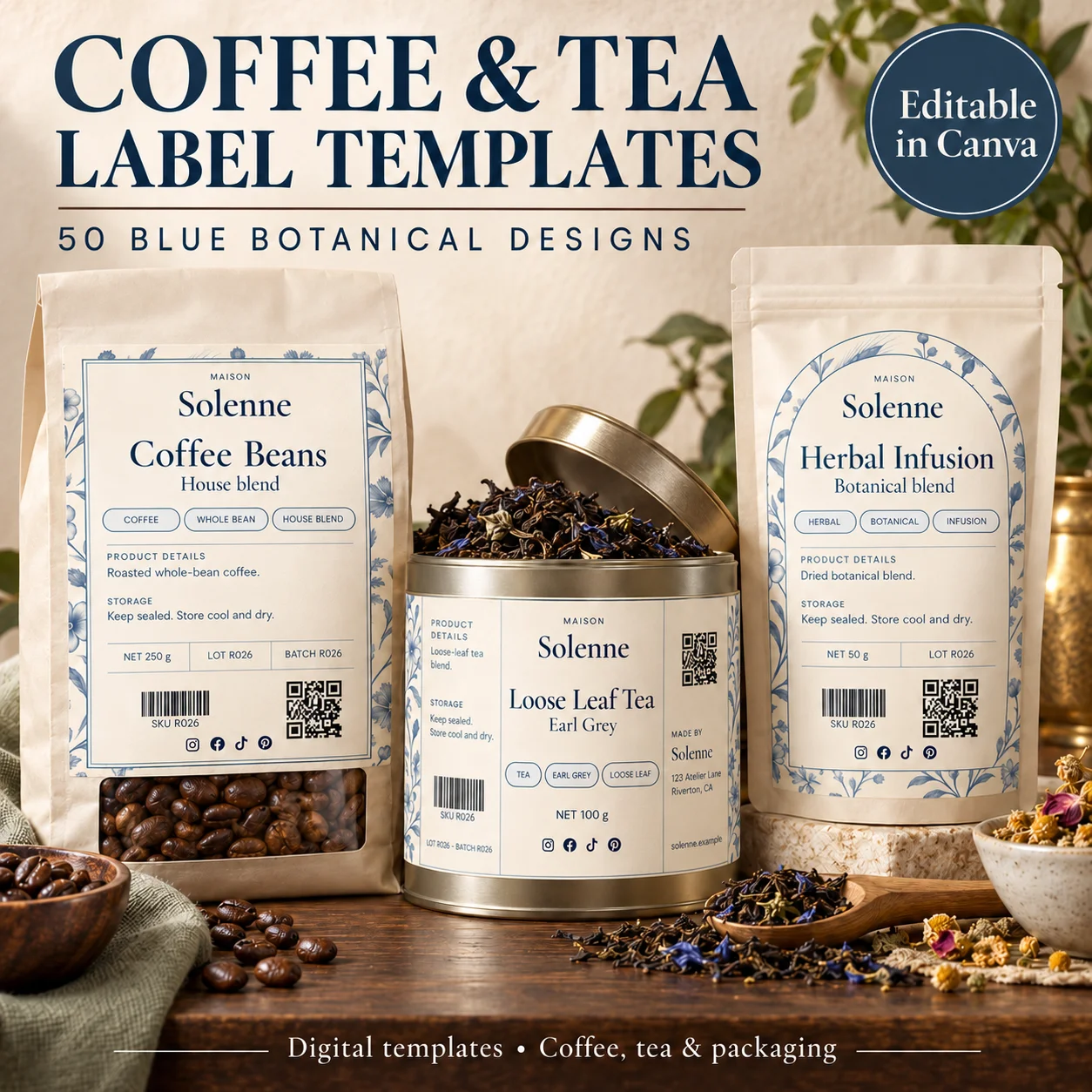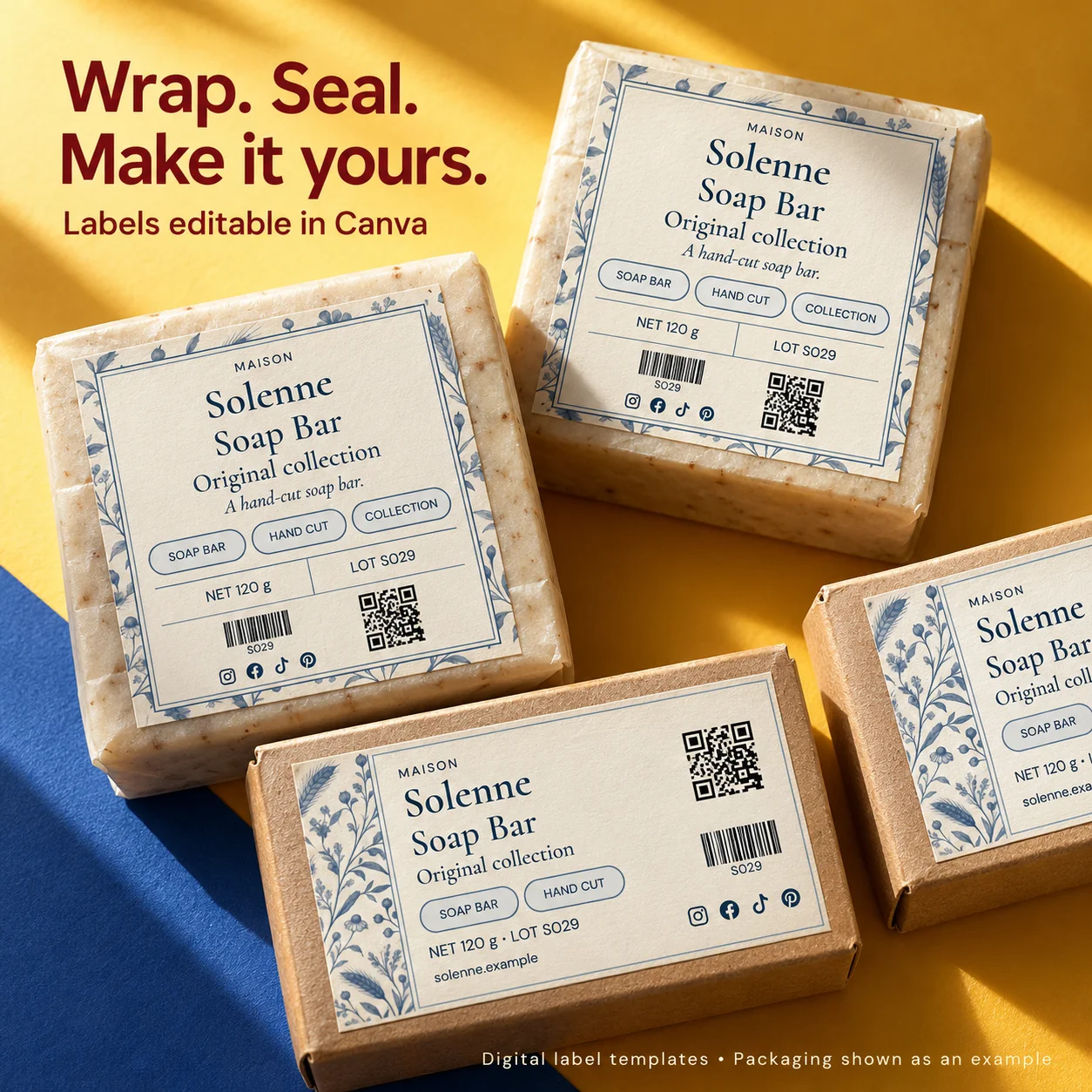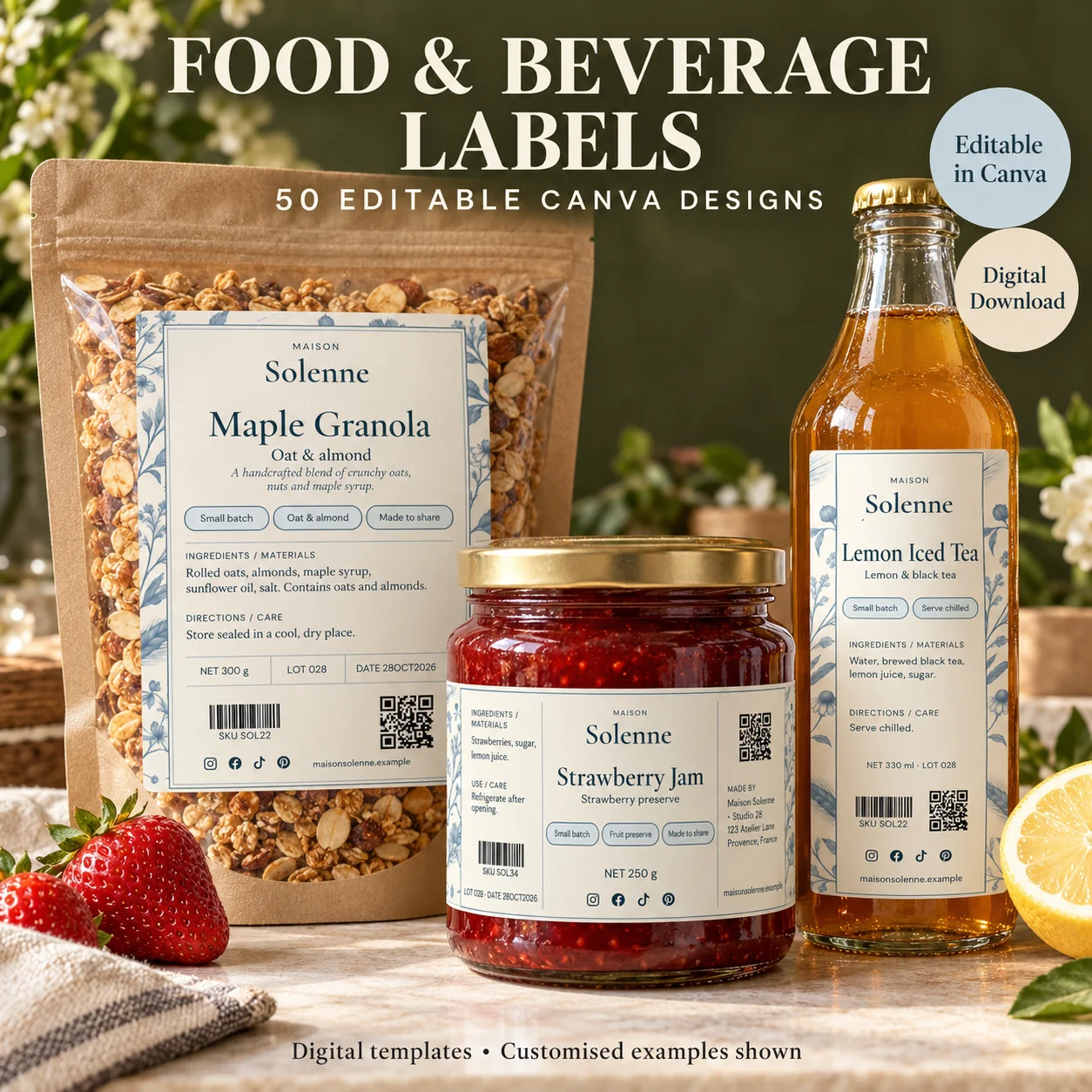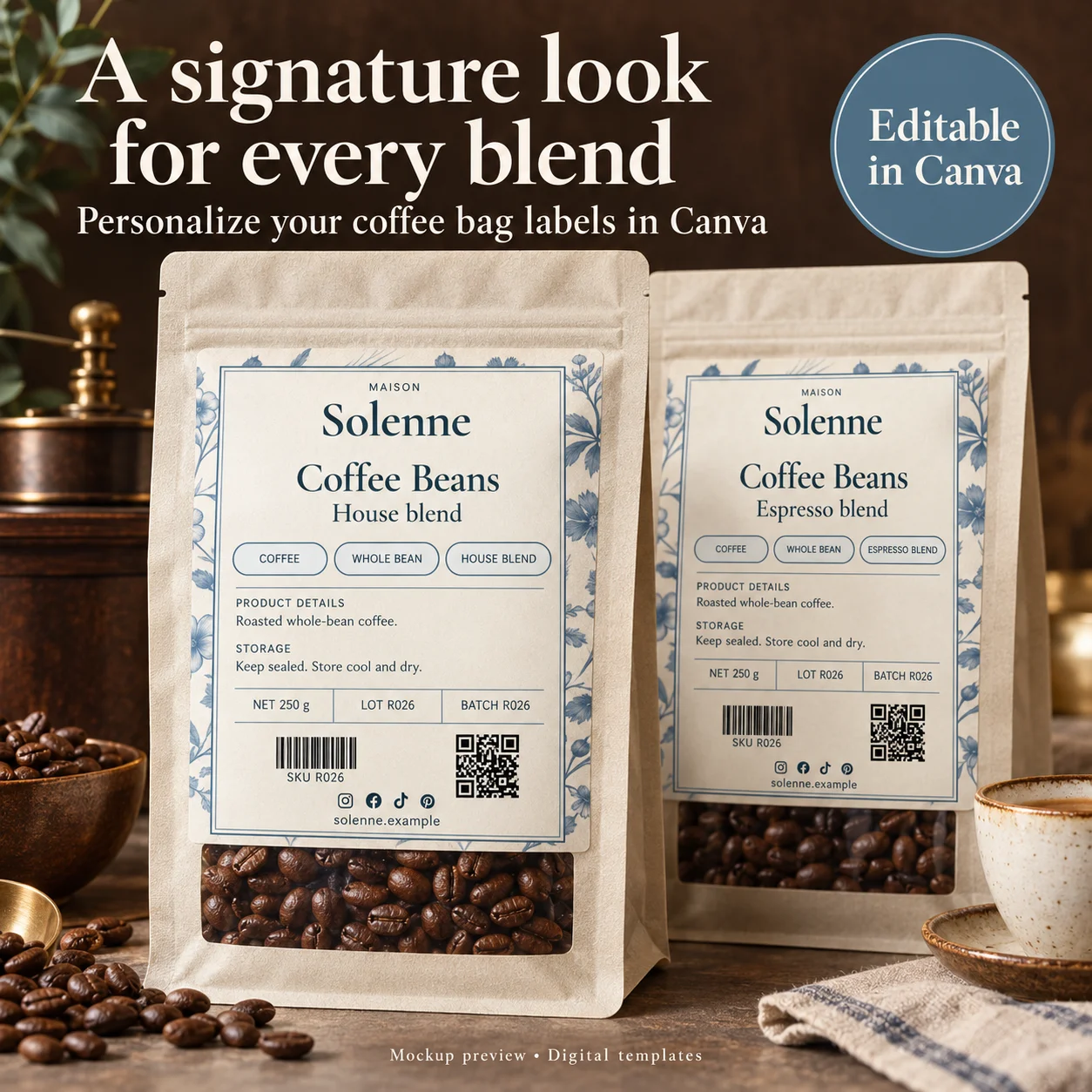
Tea packaging has to do more than suggest a mood. A customer needs to recognize the blend, distinguish it from neighboring products and find the information that helps them use it. Whether you choose a pouch, tin or jar, a clear label system can make a small range feel intentional without requiring a completely different design for every blend.
01
Start with the shopping decision
List the distinctions a customer needs to make across your range. A blend name alone may be evocative but not descriptive. Decide how the product type and other useful details will appear alongside it, so someone can understand the offer without turning the package into a guessing game.
Sketch a hierarchy using only plain text boxes. Put the primary identity first, the distinguishing details second and supporting content in an organized panel. When that plain layout reads well, add the botanical style or color treatment that gives the range its visual character.
02
Adapt the layout to the packaging format
A pouch’s shape changes when filled, while a tin or jar introduces curved viewing areas. Test the label on the package in its finished display state. Check the front from a shelf angle and in the kind of photograph you will use for your online listing.
A lid label can support a tin or jar, but it should not be treated as a miniature copy of a crowded front label. Give it a compact role, such as reinforcing the blend identity. Plan the relationship between front, back and lid before finalizing any one of them.
03
Make different blends recognizable together
Choose a stable brand position and a consistent type pairing. Then define a repeatable way to distinguish blends: perhaps a name field, a modest accent color or a small identifying motif. Check the system in grayscale too, so the products do not depend entirely on color differences.
Keep a range sheet with every blend name and its approved supporting wording. Place small exports of all the labels together and check the hierarchy across the group. The longest blend name should fit comfortably without forcing every other label to become unnecessarily small.
04
Leave space for useful supporting content
Write and verify the actual product information before compressing it into the label. Separate a short brand story from practical directions. If you include preparation guidance, make it specific to the product and check it against your own product instructions rather than copying another brand’s brewing recommendation.
Be careful with health-related language. A calm visual style or an appealing blend name does not justify an unverified benefit claim. Review both the wording and the applicable food or other category rules for the market where the tea will be sold. Design and regulatory review are separate tasks.
05
Create a print-and-pack test
Make one complete package for each format and compare the labels under normal lighting. Look at the smallest text, reflected light on glossy stock and the effect of the package color on a clear label. Handle the package and check whether the label crosses an awkward fold or edge.
Save the finished dimensions, material, export file and an approved photograph together. If you later add a new blend, use this record as a production reference. A consistent process is more useful than trying to remember the settings that made the first batch look right.
BEFORE YOUR NEXT STEP
Your practical checklist
- Define how customers distinguish the blends.
- Test the layout on the filled package.
- Keep names and variant cues consistent across the range.
- Review product wording and preparation guidance before print approval.
Questions & answers
Can one tea label work on pouches and tins?+
The visual style can carry across, but each package needs its own size and panel arrangement. Test them independently.
Should I put a long brand story on the front?+
Only if the product identity remains clear. A supporting panel, insert or product page may give the story more readable space.
This design guide does not assess health claims or certify food labels for any market.
Sources & further reading
Official references for the technical points in this guide. Check current specifications before production.