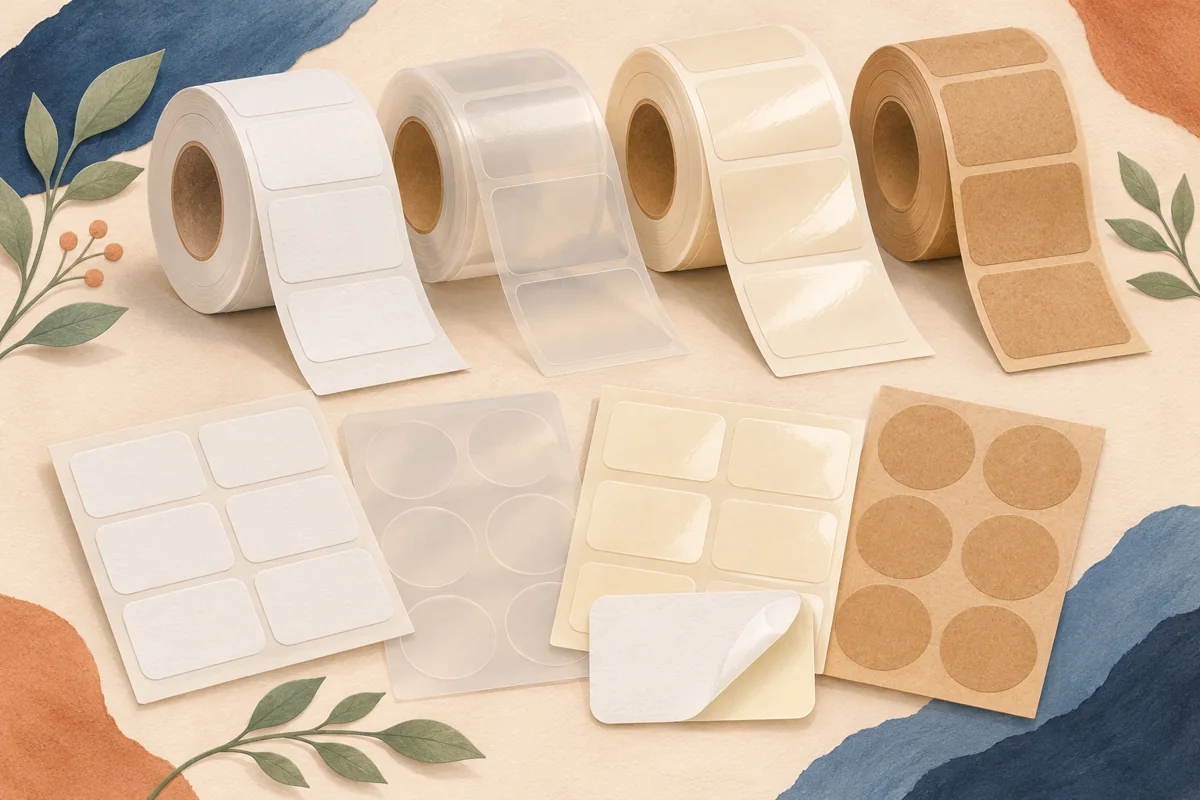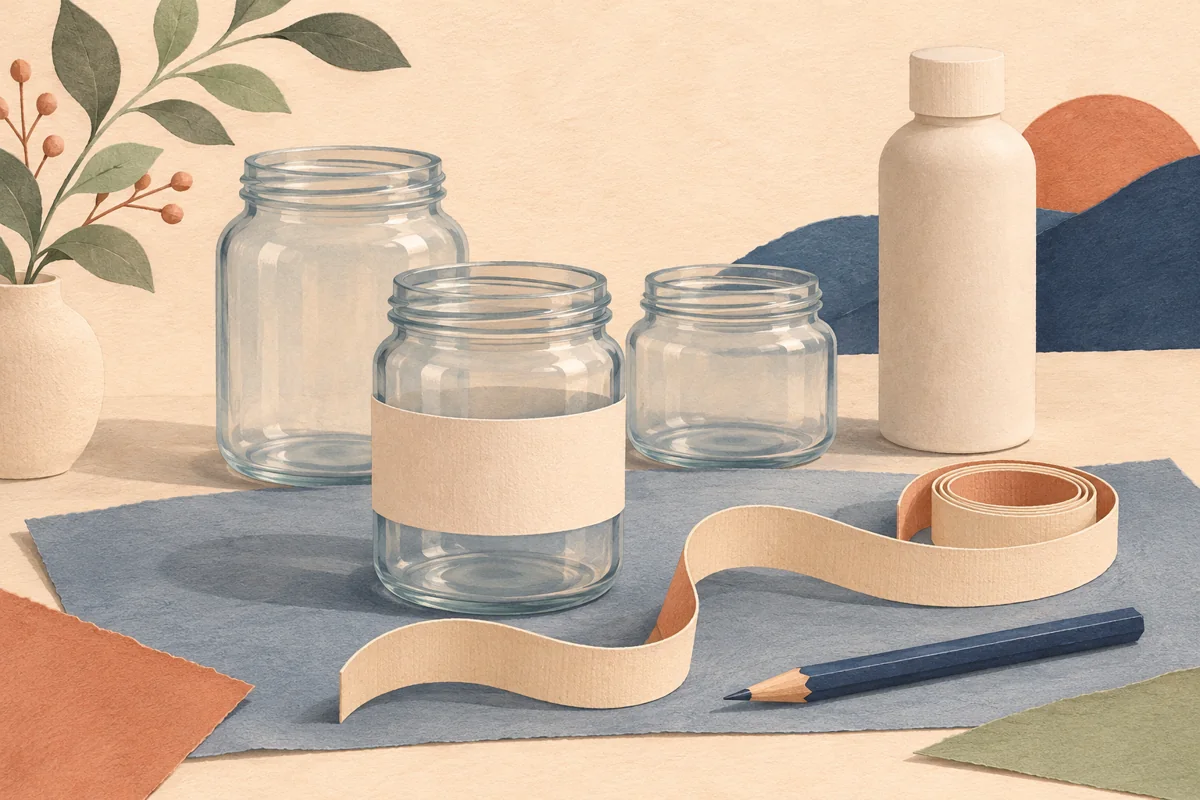
A label that fits a square olive oil bottle can behave very differently on a round one. Corners give the square bottle a clear front boundary; a cylindrical bottle lets words curve away from view. Compare the same approved product identity on both surfaces before choosing a layout.
01
Understand the two front-panel geometries
Berlin Packaging describes Marasca as a square oil-bottle style and Dorica as a tall cylindrical style. Those basic geometries are useful starting points for the artwork discussion. The supplier’s exact drawing and a physical sample still determine the label dimensions for the model you select.
On a square sample, mark the face between the rounded corners. On a cylindrical sample, wrap a paper strip around the body and mark the portion visible from straight ahead. Keep the front-facing text within the part that can be read without rotating the package. Measure shoulders and lower curves separately.
02
Compare one identity on both samples
Use an illustrative product name such as Estate Olive Oil for the layout trial, then replace it with the business’s approved wording. Put the same brand and identity into both paper proofs at the same type size. This makes the effect of the container shape easier to assess.
The square face may encourage a narrow, tall composition. The round bottle may work better with a compact central name. Let the geometry influence spacing without changing the relative importance of brand and product identity. A longer label is not useful if its most important words disappear around the sides.
| Bottle style | First layout question |
|---|---|
| Square Marasca | Does the name stay on one face? |
| Round Dorica | How much text stays front-facing? |
| Smaller size | Is supporting wording still readable? |
03
Plan verified details without crowding the front
Provide a clear rear or side layout for owner-approved information. Use only substantiated wording for origin, harvest, grade, production method and other product statements. Do not add a traditional estate name or geographic symbol merely because it makes a template look authentic.
If the range includes multiple sizes, keep the identity hierarchy stable and change the quantity information through the business’s approved process. Check the smallest bottle first for readable supporting text. Scaling the entire large label down may make a decorative line work while making the useful information too small.
04
Check color on the complete bottle
Place the printed proof on the actual glass color and inspect it with the intended contents. A clear label on dark glass can give a very different result from an ivory paper proof laid over a white screen background. Ask the printer about materials and ink construction appropriate to the desired appearance.
Compare the bottle upright on a shelf, in a gift pair and in the shop’s thumbnail crop. Save one approved front and rear photograph for every format. When a bottle model changes, recheck the face width and shoulder position before treating the old artwork dimensions as reusable.
BEFORE YOUR NEXT STEP
Your practical checklist
- Measure the exact square or round sample.
- Compare the same name at equal type size.
- Verify origin and product statements.
- Proof the actual glass and contents.
Questions & answers
Can a wrap label work on a square bottle?+
It can, but corners and adhesive performance require a suitable construction. Keep the essential front identity on a clearly readable face and ask the supplier about the complete label.
Should every bottle size use a scaled copy?+
Coordinate the designs, but review each size separately. The smallest format often needs a different arrangement of supporting information.
Sources & further reading
Official references for the technical points in this guide. Check current specifications before production.