A tall sauce bottle can make a striking silhouette while giving a surprisingly narrow front view. An oval bottle may offer a broad panel but a different side profile. Compare the label space on actual samples before choosing the shape for a new sauce range.
01
Start with a matched bottle and closure
Obtain the bottle drawing and the matching closure specification from the supplier. Ask it to confirm the package’s suitability for your product and intended use. The design comparison can then focus on the parts you can inspect: body shape, shoulder, neck, closure and smooth labeling area.
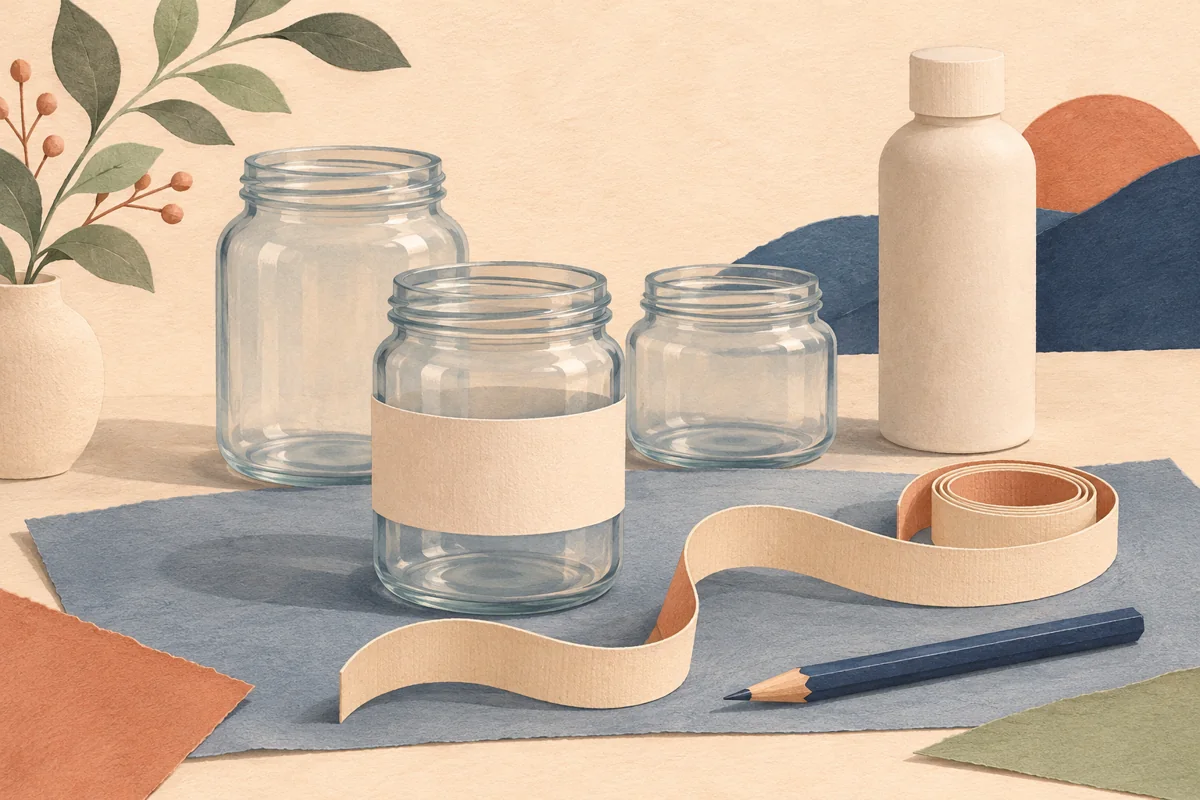
Stand two candidates beside each other with their lids fitted. Draw a paper outline around the smooth wall on each bottle. Keep the outline off the shoulder and base curves. A bottle’s overall height can exaggerate the apparent label area if a long neck occupies much of that height.
02
Compare the front instead of flattening the design
A full rectangular artwork file looks readable on a screen because all of it faces you. Once wrapped around a round bottle, its sides turn away. Mark the first-view area on a paper proof and keep the sauce name inside the part a customer sees straight on.
Use an illustrative name such as Roasted Garlic Pepper Sauce on both candidates. A broad oval front might accommodate a wider arrangement. A slim round bottle may need a deliberate two-line name. Judge the actual reading distance before deciding that a smaller font solves the problem.
| Shape feature | What to test |
|---|---|
| Straight wall | Rectangle follows the usable panel |
| Tapered wall | Proof stays flat without puckering |
| Oval body | Front identity remains on the broad face |
| Long neck | Main label clears the shoulder curve |
03
Check the taper with a paper proof
Wrap a paper rectangle around the intended panel without forcing it flat. If its edges skew or the paper wrinkles as it reaches around the bottle, mark the area of change. Discuss the sample with your label printer rather than stretching the artwork to hide a physical mismatch.
A printer may recommend a shaped label, a smaller front panel or another suitable construction for the exact surface. Request its approved outline before editing the final file. Place text and decoration within that outline and keep the printer’s specified safe area clear of important wording.
04
Evaluate the bottle in its complete arrangement
Set the samples in the tray, shelf row or gift box you intend to use. Wide shoulders and projecting closures can change the spacing even when the bottle bases fit. Turn the packages naturally and check whether the brand and sauce variety remain easy to distinguish.
Record the chosen bottle, closure, panel dimensions and label stock as one package reference. Include a front photograph containing the longest sauce name. If you switch suppliers, repeat the sample comparison before reordering labels because a visually similar silhouette can have a different shoulder or taper.
BEFORE YOUR NEXT STEP
Your practical checklist
- Compare bottles with closures fitted.
- Mark the first-view label area.
- Check taper using paper.
- Approve a complete shelf or box sample.
Questions & answers
Can a rectangular label work on a tapered bottle?+
It depends on the panel and label construction. Try a paper proof and ask the printer to confirm the suitable shape.
Does a taller bottle allow larger lettering?+
Only when its usable front panel supports it. A long neck or curved shoulder can leave less body space than expected.
Sources & further reading
Official references for the technical points in this guide. Check current specifications before production.