A simmer-pot pack can be mistaken for a tea blend, baking mix or decorative food gift if its label depends only on visible citrus and spices. Give the pack a written identity that explains the actual product. Then plan the information panel around the filled bag, where folds and loose contents can change what remains readable.
01
Write the product identity before choosing a bag
Start with the exact product description and approved directions supplied by the maker. Do not create a use recipe or ingredient claim just to complete the label. A product styled with familiar pantry ingredients still needs to be identified according to its actual purpose and specifications.
ClearBags includes a simmer-pot example in its gift-packaging ideas, which is useful for observing a presentation format. It does not establish the correct barrier, shelf life or instructions for your blend. Ask the product and packaging suppliers to confirm those decisions for the specific contents you are selling.
02
Measure the filled front and rear panels
Fill a sample using the actual product and close it in the intended way. Mark the zipper, folded top, seal area and lower gusset before placing a paper label. Loose pieces may press against one part of the bag while leaving another panel comparatively flat.
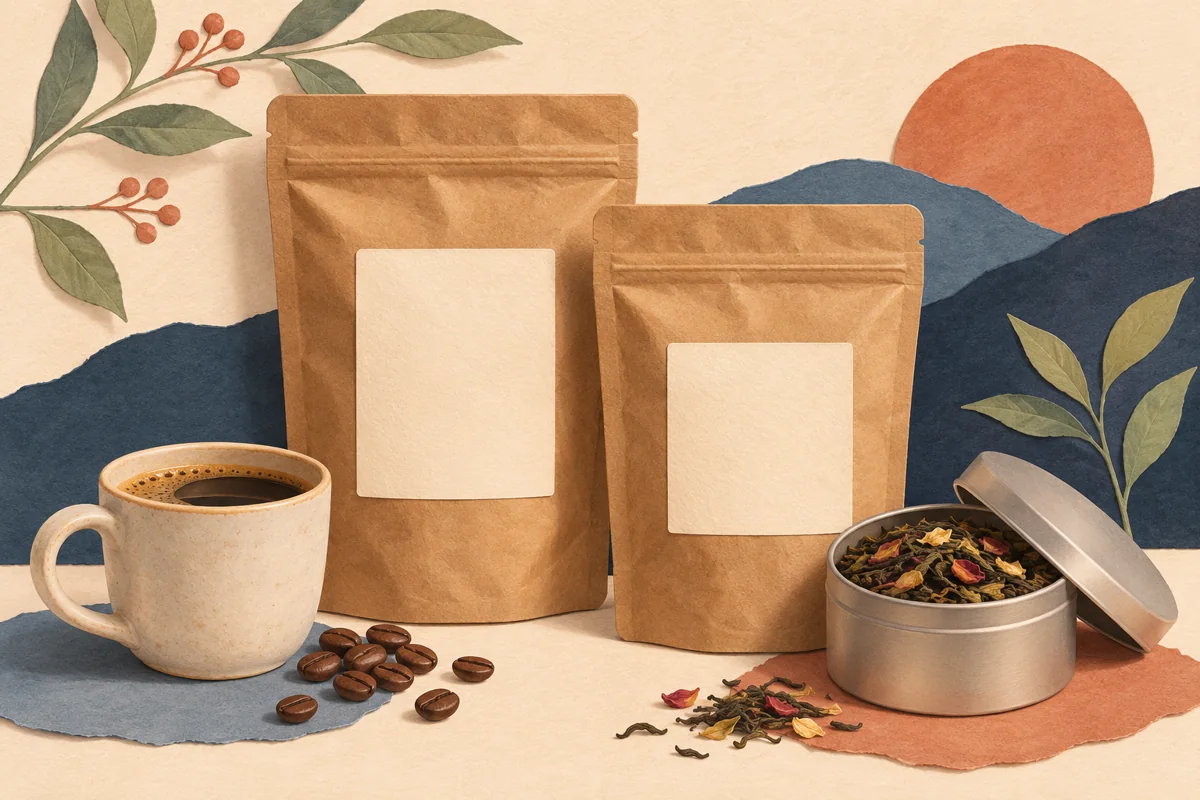
For an illustrative pouch, compare a small front identity label with a larger rear information label. Leave a controlled window where the contents can be seen without forcing the text onto a bulging edge. A larger sticker is not necessarily easier to read if it wraps into a fold.
| Area | Content to plan |
|---|---|
| Front | Written product identity and variant |
| Rear | Complete approved directions and details |
| Visible window | Accurate view of the actual contents |
03
Make gift styling support identification
Use a gift tag for the recipient’s name or occasion, while keeping the permanent product identity on the pouch. If the tag falls away, the remaining package should still be understandable. Do not let a decorative phrase such as Cozy Kitchen become the only description of what is inside.
Compare the pouch beside a tea gift or food hamper component if you intend to sell a mixed assortment. Check whether the label wording and placement distinguish the items clearly. Resolve potential confusion through verified product naming rather than a color cue that may be missed in a photograph.
04
Approve the complete pack and its listing together
Photograph the final filled sample and check that the online description agrees with the printed product name, contents and supplied directions. Keep decorative props out of the included-items list unless they are actually part of the order. A ribbon shown in a mockup should not silently become a customer promise.
Retain the approved label file with the blend and packaging references. Review the wording when the product changes, and repeat the fit check when the pouch or closure changes. This creates a useful gift presentation while leaving formulation, storage and use decisions with the responsible product suppliers.
BEFORE YOUR NEXT STEP
Your practical checklist
- Confirm the exact approved product description.
- Measure a filled and closed pouch.
- Separate gift wording from product identity.
- Match printed details with the live listing.
Questions & answers
Can the ingredients alone explain the product?+
No. Use a clear written identity and the complete maker-approved information so it is not confused with another pantry-style item.
Does a gift-packaging example prove the bag is suitable?+
It provides a presentation idea only. Confirm the material and other specifications for your actual product with the responsible suppliers.
Sources & further reading
Official references for the technical points in this guide. Check current specifications before production.