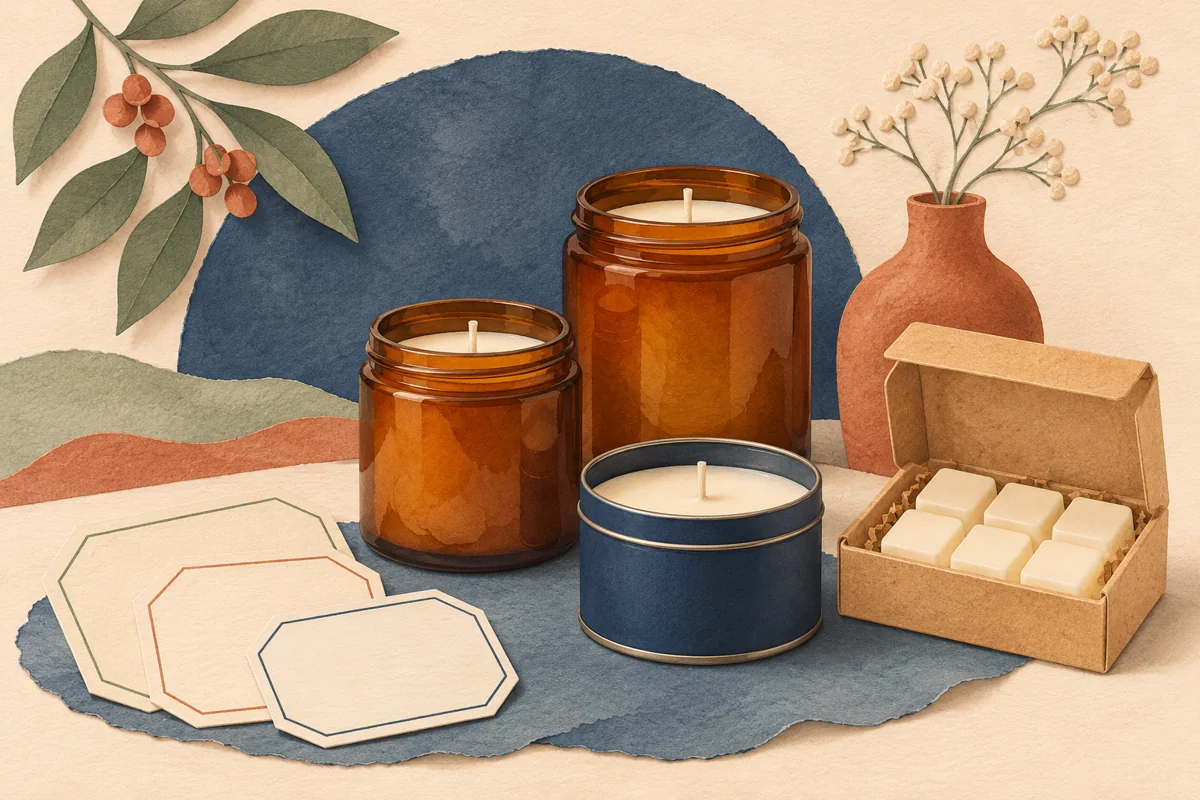
Candle Label Design for Jars and Tins
Plan candle labels around your actual jar or tin, organize scent names and supporting panels, and proof the artwork before printing.
Read the guideTHE HERDIGITALART GUIDE LIBRARY
Coordinate candle vessels, wax-melt packs, sprays and diffuser boxes. Check scent identity, physical fit and the information that must remain connected to each product.
61 practical guides
Plan candle labels around your actual jar or tin, organize scent names and supporting panels, and proof the artwork before printing.
Read the guideCreate a wax-melt label system for clamshells, bags and boxes, with practical space planning, clear scent variants and a repeatable proofing workflow.
Read the guide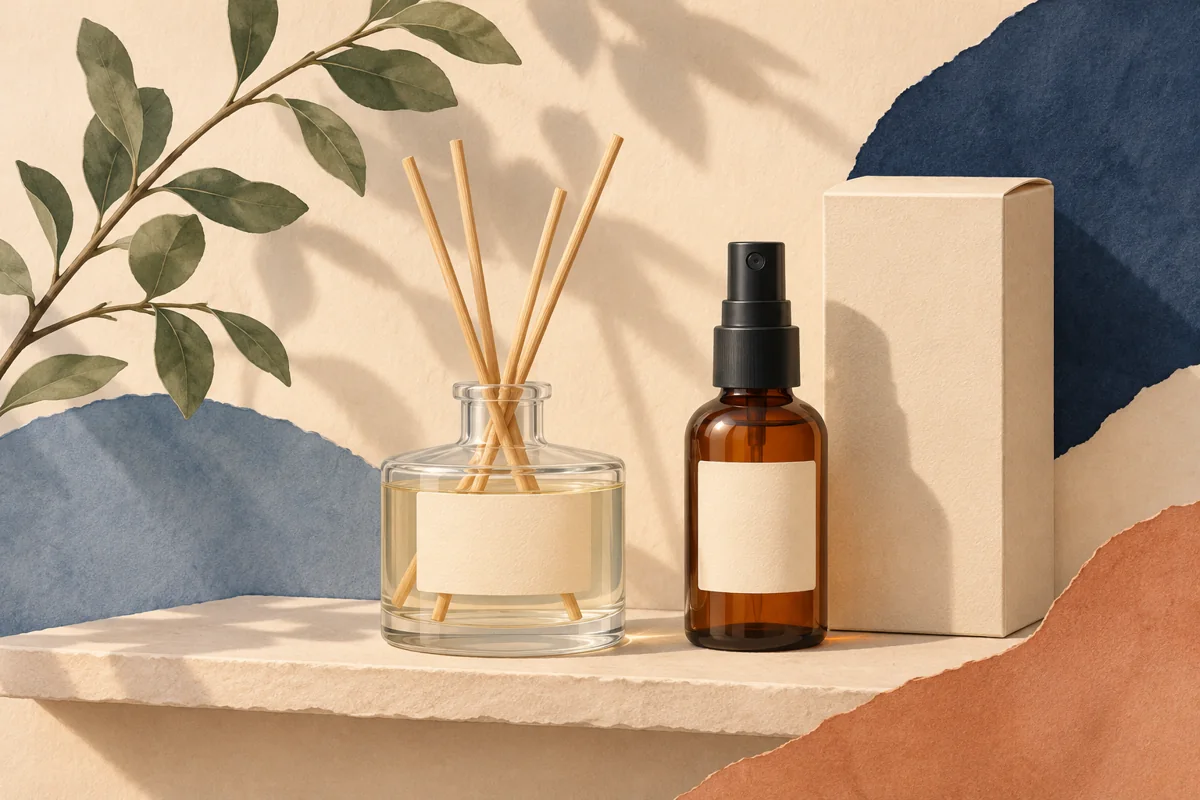
Design a coordinated reed-diffuser presentation across bottles, boxes and inserts, with clear scent identity, measured label areas and practical proof checks.
Read the guidePlan candle labels around your actual jar or tin, organize scent names and supporting panels, and proof the artwork before printing.
Read the guideCreate a wax-melt label system for clamshells, bags and boxes, with practical space planning, clear scent variants and a repeatable proofing workflow.
Read the guidePlan readable room-spray bottle labels, organize scent variants and supporting information, and check the design on your actual bottle and outer box.
Read the guideDesign a coordinated reed-diffuser presentation across bottles, boxes and inserts, with clear scent identity, measured label areas and practical proof checks.
Read the guideWrite funny candle labels with short, original lines for birthdays, housewarmings and thank-you gifts. Keep the scent clear and proof your variants.
Read the guideCreate quiet, polished candle packaging and compare physical label proofs for hierarchy, placement, colour and finish before ordering.
Read the guideTest transparent candle labels on amber, clear and tinted jars. Compare white ink, wax colors and viewing conditions with a simple cold-jar proof.
Read the guideReserve space for your approved candle warning artwork, keep it separate from branding and proof the complete package before sending files to print.
Read the guidePair memorable candle scent names with plain fragrance notes. Build a naming pattern and check every option on the actual jar and shop listing.
Read the guidePlan a removable candle dust cover around the jar opening and wick. Check the paper fit, lift tab and removal instruction before printing.
Read the guideOrganize a candle care card around unboxing and first use. Check readable type, product-specific directions and the right insert for each vessel.
Read the guideChoose and package candle wedding favors with personal labels, readable scent names and care information that reaches the recipient.
Read the guidePlan a candle gift basket with useful companions, stable packing and matching labels. Compare three themes and test the finished basket before gifting.
Read the guideSeparate jar capacity from usable label space. Build a vessel measurement sheet for labels, lids and outer packaging before ordering a candle container.
Read the guideCompare candle tins and glass vessels by label area, closure, visibility and outer-pack fit. Use assembled samples to plan a consistent packaging range.
Read the guidePlan an insert around the assembled candle and box. Check movement, lift-out access and label visibility with a complete packaging sample.
Read the guidePlan a removable candle packaging band around folds, seams and visible product names. Make a paper mockup before setting the artwork.
Read the guideMeasure the flat lid area, plan readable scent names and check orientation when the candle is displayed, boxed or stacked.
Read the guideChoose a front label position on the actual candle jar. Compare paper proofs, mark a repeatable baseline and review the package in its display.
Read the guideCompare the outside pack, display tab and label panel of a wax melt clamshell. Record each model instead of choosing artwork from its stated fill.
Read the guidePlan a label for a long wax melt snap bar pack. Check front orientation, hanging hardware and scent identification in a multi-scent display.
Read the guidePlan numbered compartments, scent identification and an assembly check for a wax melt calendar. Separate the gift artwork from the information that stays with each pack.
Read the guideMeasure the complete reed diffuser set before choosing a retail box. Check bottle orientation, reed length, insert clearance and the visible front label.
Read the guidePlan a room spray retail pack around the fitted closure and bottle shape. Check label protection, product identity and the way a customer opens the package.
Read the guideDifferentiate a reed diffuser refill from the original bottle. Plan the product name, quantity and compatible range using a readable front-and-back layout.
Read the guidePlan a small candle assortment with clear positions, scent names and an insert. Check the opening sequence and product identity when the pieces are separated.
Read the guideCreate a restrained color system for candle scent variants. Pair accents with clear names, test printed contrast and record repeatable color references.
Read the guidePlan candle rows, sample positions and shelf identifiers around the way shoppers compare fragrances. Check label visibility before adding props.
Read the guideOrganize outer case labels for candle wholesale orders. Match product codes, scent names and quantities to the packing list and retailer requirements.
Read the guidePlan decorative matchbox labels and gift-set placement around the original sleeve, moving tray and manufacturer information.
Read the guideSeparate personal gift wording from scent identity, product information and the repeatable candle label master.
Read the guideDesign refill packaging around the exact approved candle system, vessel identity and instructions rather than a generic jar-size assumption.
Read the guidePlan scent-card identity, presentation and follow-up links while keeping sample materials and use within supplier instructions.
Read the guideSeparate permanent subscription packaging from changing monthly scent information, packing records and customer inserts.
Read the guidePlan co-branded candle gifts, approval records and recipient-specific packing without overwhelming the permanent product label.
Read the guideCreate an after-use information card with a documented vessel reference, approved directions and a clear route for unresolved questions.
Read the guidePlan packaging for decorative wax sachets with clear product identity, hanging-detail space and a measured information panel.
Read the guideArrange simmer-pot pouch labels around the visible contents, verified product description and complete maker-approved directions.
Read the guideDesign incense sleeves and bag labels around stick length, opening clearance, scent identity and verified product information.
Read the guidePlan tiny car-diffuser labels around the actual bottle, cap, cord and outer display box without hiding product information.
Read the guideBuild a readable identification system for narrow fragrance sample vials, closures and assortment keys.
Read the guideMeasure reed bundles and plan sleeve labels that distinguish replacement reeds from a complete diffuser product.
Read the guideOrganize wax-melt scent names, format options and product links into a readable printed or digital menu.
Read the guide
Prepare coordinated labels, product references, photography and launch copy for a candle, spray or diffuser collection.
Read the guideStructure a candle and diffuser gift guide around real product differences, clear inclusions and useful product links.
Read the guidePlan long candle-pair cartons around the two ends, viewing window and pair identity before choosing an applied label.
Read the guideDesign a pillar-candle sleeve around its viewing area, overlap and removable identity rather than a guessed wrap size.
Read the guideArrange tealight multipack identity around the actual tray count and visible grid before preparing a top label.
Read the guidePlan a votive tray identifier that works while the tray is full, partly emptied and displayed beside matching units.
Read the guideRecord glaze changes, curved shoulders and stable front areas on the actual ceramic vessel before sizing a decorative label.
Read the guideCompare an external tag and supplier-approved smooth panel when a ribbed candle vessel offers little continuous label space.
Read the guideMap a cylindrical paper tube into body, lid and seam zones so decorative artwork stays readable after opening.
Read the guidePlan the card revealed by a sliding candle box without covering the product, trapping the pull or confusing the opening sequence.
Read the guideCreate a visual orientation system for lift-off candle boxes so the lid, side labels and inner presentation remain coordinated.
Read the guideAlign carton graphics with the real vessel view and insert position before approving a decorative candle window box.
Read the guideUse a compartment map and removable identification cards to keep a multi-item fragrance assortment understandable during packing and opening.
Read the guideMap a room-spray bottle with its fitted trigger so the front label remains readable and the moving head stays unobstructed.
Read the guideCreate a packing reference that distinguishes a diffuser stopper, decorative collar and reeds without turning the label into an improvised instruction manual.
Read the guideDesign a neck-mounted diffuser card around the approved opening, collar and natural resting angle rather than a decorative circle.
Read the guideCreate a clear contents and identification card for a candle accessory set without inventing universal tool instructions.
Read the guideIdentify candles, sprays and diffuser components clearly in one gift box without applying a single care instruction to every item.
Read the guide