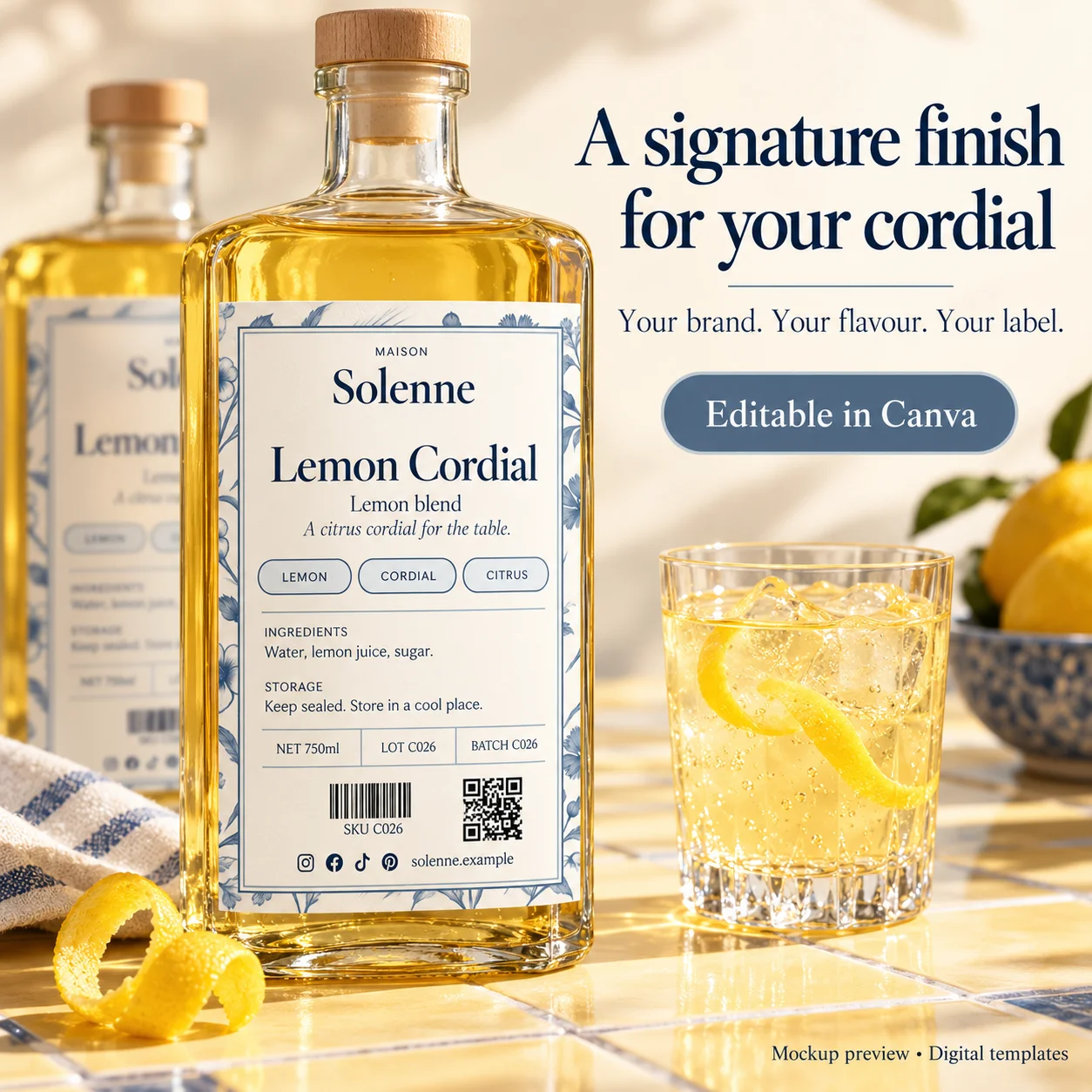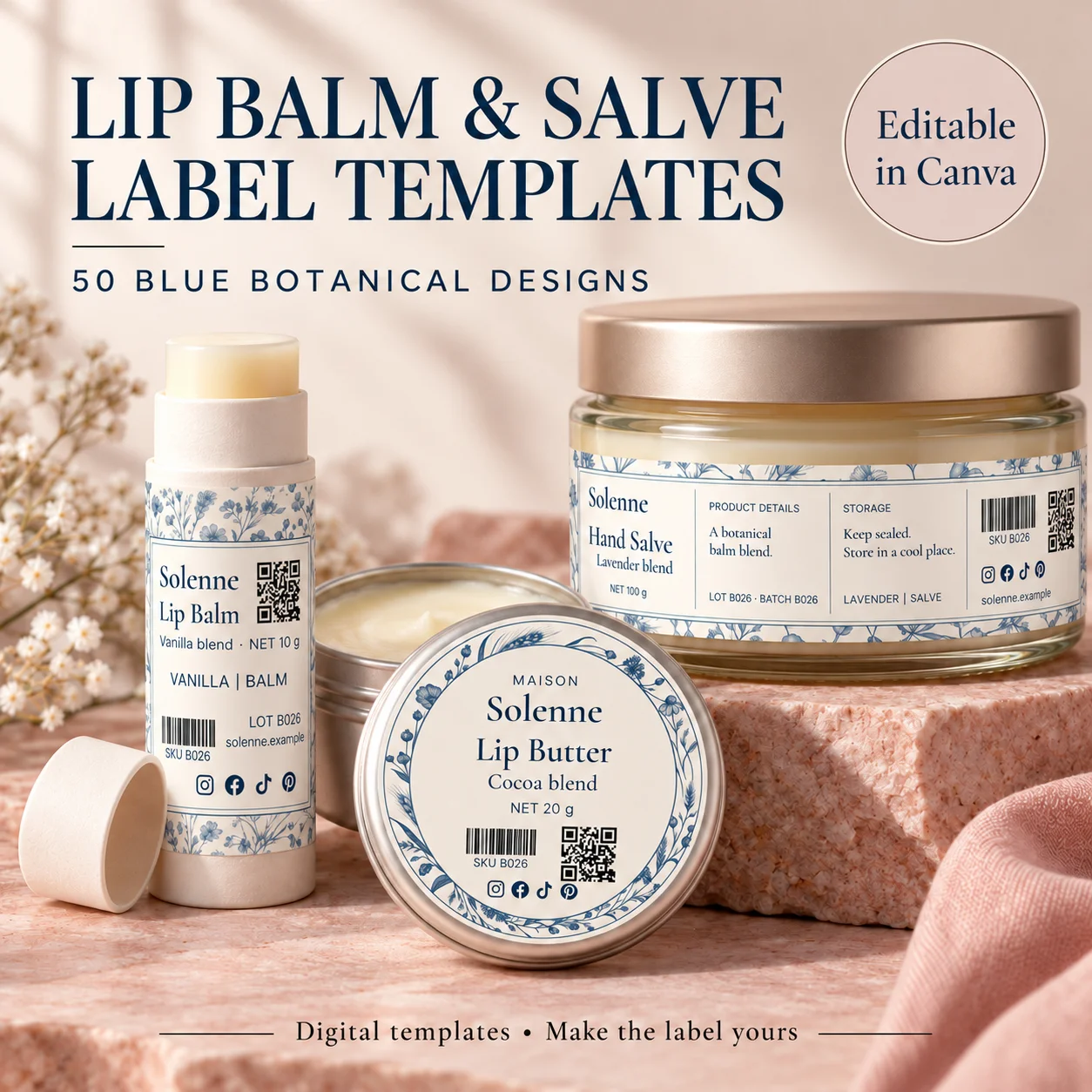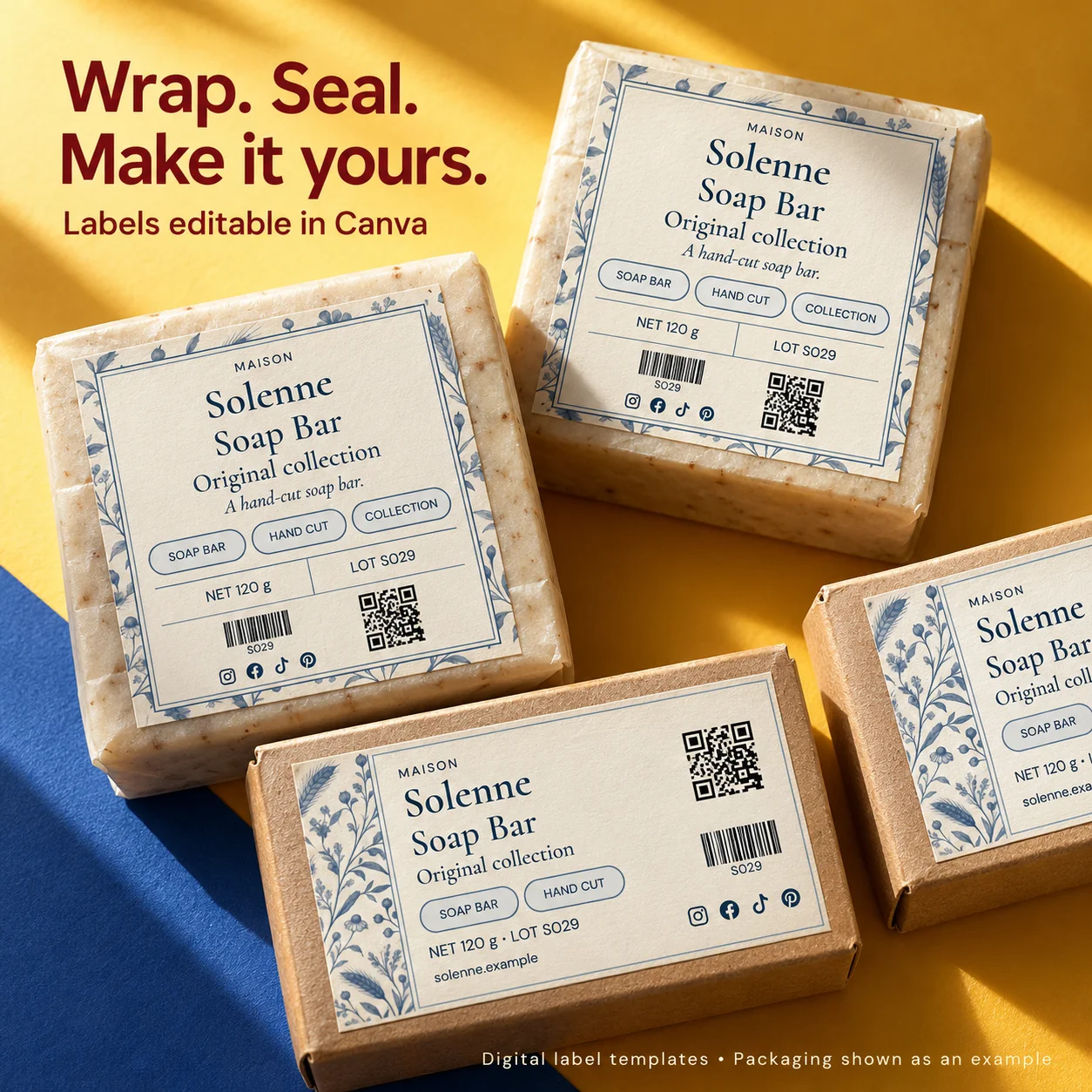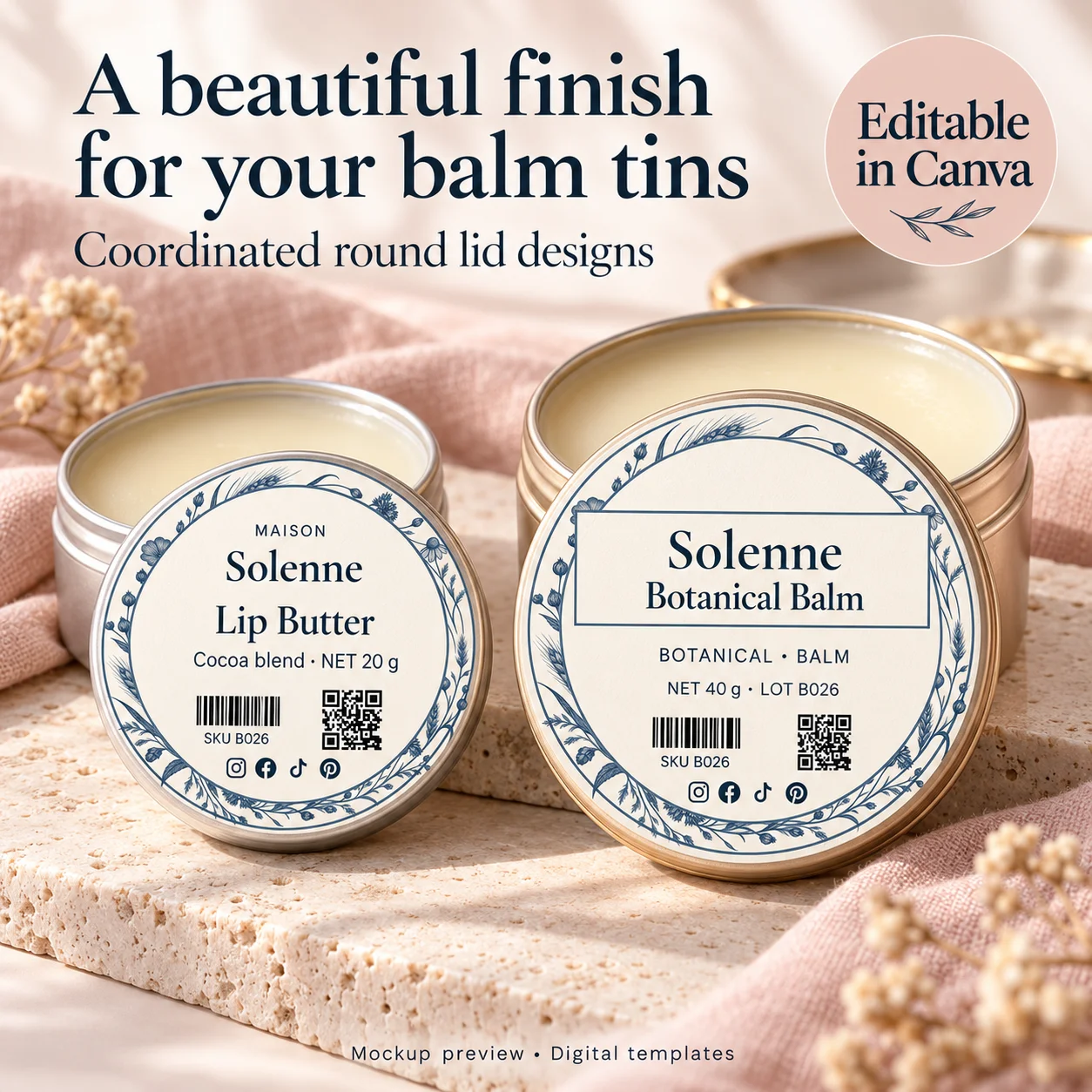
A skincare collection can include a wide bottle, a small jar and a narrow tube, all with different amounts of usable label space. Making them look related is a layout problem as much as a color choice. Start by defining the information and conditions for each container, then adapt the visual system instead of shrinking one design until everything technically fits.
01
Build a package map for the collection
List every container model you intend to use, with its supplier code and actual measurements. Note the front area, supporting panel area and any lid-label opportunity. Include pumps, caps and seams that may change how the package is held or viewed.
Create a simple diagram showing where each block of information will go. A jar with a short wall may need a different arrangement from a tall bottle. Make that decision before adding artwork so the information has a deliberate home instead of competing with the design at the end.
02
Keep the product easy to identify
Use a consistent position for the brand, product type and variant. A decorative collection name can support the identity, but should not make a shopper guess whether they are looking at a balm, oil or cleanser. Make the key distinction visible before smaller descriptive details.
Compare two products side by side in a shelf-style photograph. If their names disappear at that scale, reconsider the hierarchy. You can preserve a quiet, refined look by simplifying surrounding decoration rather than reducing the product name. Small packages benefit from a disciplined reading order.
03
Protect space for accurate wording
Collect the final product text before finishing the layout. Copying a sample design’s ingredient list or directions is not a substitute for checking your own formulation and intended use. Keep an approved text sheet for each product so later design revisions do not introduce an old or unrelated statement.
For products sold in the United States, FDA’s cosmetics labeling guidance is a useful starting point for the relevant category. Requirements differ by product and destination. Treat the template as a visual framework, and arrange a separate review of required statements, claims and presentation before sale.
04
Choose materials for the way the package is used
Describe the expected handling: dry shelf storage, occasional splashes, repeated wiping or possible contact with oily fingers. Ask the label supplier about the exact material, print and adhesive combination. A waterproof claim alone does not tell you how a label performs with oils or a particular container surface.
Prepare a finished sample using the real package. Apply it as directed, let it set and test the ordinary use conditions you described. Check legibility, color transfer and the edges. Retain an untouched sample beside it so subtle changes are easier to see.
05
Adapt the system rather than shrinking it
Keep shared decisions such as type family, border style and alignment, but vary the layout when the container demands it. A narrow tube might need fewer lines on the front, while a jar can separate its identity between the lid and side. These can still feel like one collection.
Before batching, place the whole range together and check its consistency. Then inspect each item independently. The collection should look cohesive, but every individual product must still be understandable when sold on its own. Save approved exports with the container and artwork version clearly identified.
BEFORE YOUR NEXT STEP
Your practical checklist
- Record usable areas for every container format.
- Keep product identity and variants clear.
- Use approved product-specific wording.
- Test the complete print construction under expected handling conditions.
Questions & answers
Can I make every skincare label the same size?+
Only if that size works on every actual container and leaves enough readable information space. Visual consistency does not require identical dimensions.
Will a botanical template make my product label compliant?+
No. Artwork does not verify the formula, claims, mandatory wording or destination-market requirements.
This is a design workflow, not a compliance assessment or a review of any product’s safety or claims.
Sources & further reading
Official references for the technical points in this guide. Check current specifications before production.