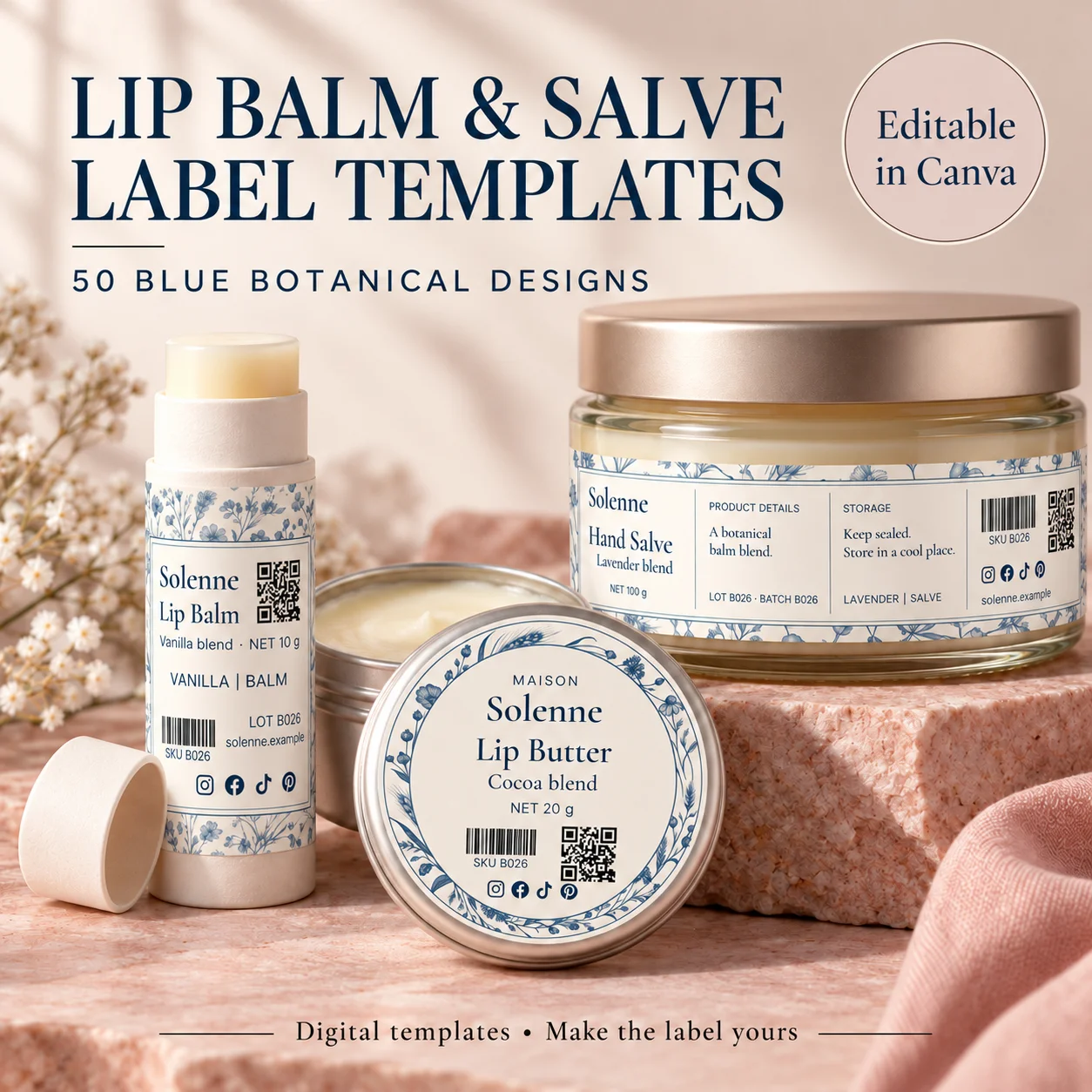
Small lip balm packages make every millimeter matter. A label can be the right width on paper but still interfere with a cap, wrap across a seam or hide important wording around the back of a narrow tube. Instead of beginning with a standard size found online, measure your own container and decide which area should face the customer.
01
Measure the area that stays still
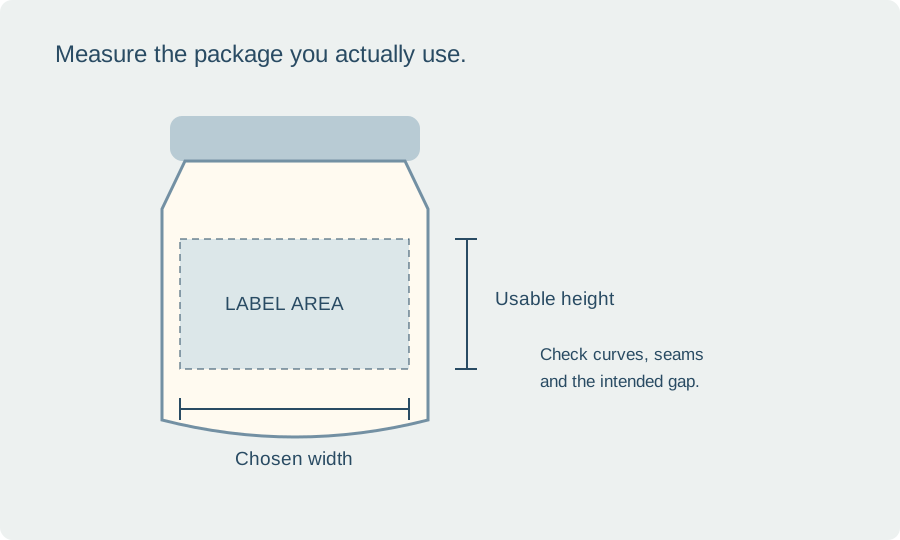
Check the empty package’s cap line, turning mechanism and any molded ridges. The usable label area is the section where the label can sit without covering an opening or moving part. Measure that area directly, rather than using the total length of the closed tube.
Then wrap a paper strip around that body area and mark the meeting point. Lay the strip flat and record the circumference. Decide whether your label construction needs a visible gap or an overlap, following the material supplier’s advice. Mark the position that should become the front of the finished package.
02
Do not stretch a rectangle over a taper
Some tubes and tins are not perfectly cylindrical. A paper wrap can reveal whether the upper and lower edges want to travel different distances. If the strip wrinkles or refuses to sit evenly, investigate a smaller label area or a shape designed for that package.
A label’s material also affects how it behaves around a small curve. Ask the supplier whether the stock suits the container and its diameter. A highly attractive sample on a larger jar does not prove that the same construction will hold comfortably on a narrow tube.
03
Create a readable front and seam area
Designate a front panel within the wrap, even if you are using a single continuous label. Place the main identity where it can be seen without rotating the tube. Keep the closure or overlap away from key words and from any scannable code you plan to add.
Do not solve a crowded layout by reducing all the text. Simplify decorative elements, shorten optional wording or rethink the panel arrangement first. Required information needs a market-specific review, and a small package does not automatically mean every small-text treatment is acceptable.
04
Give tins their own layout
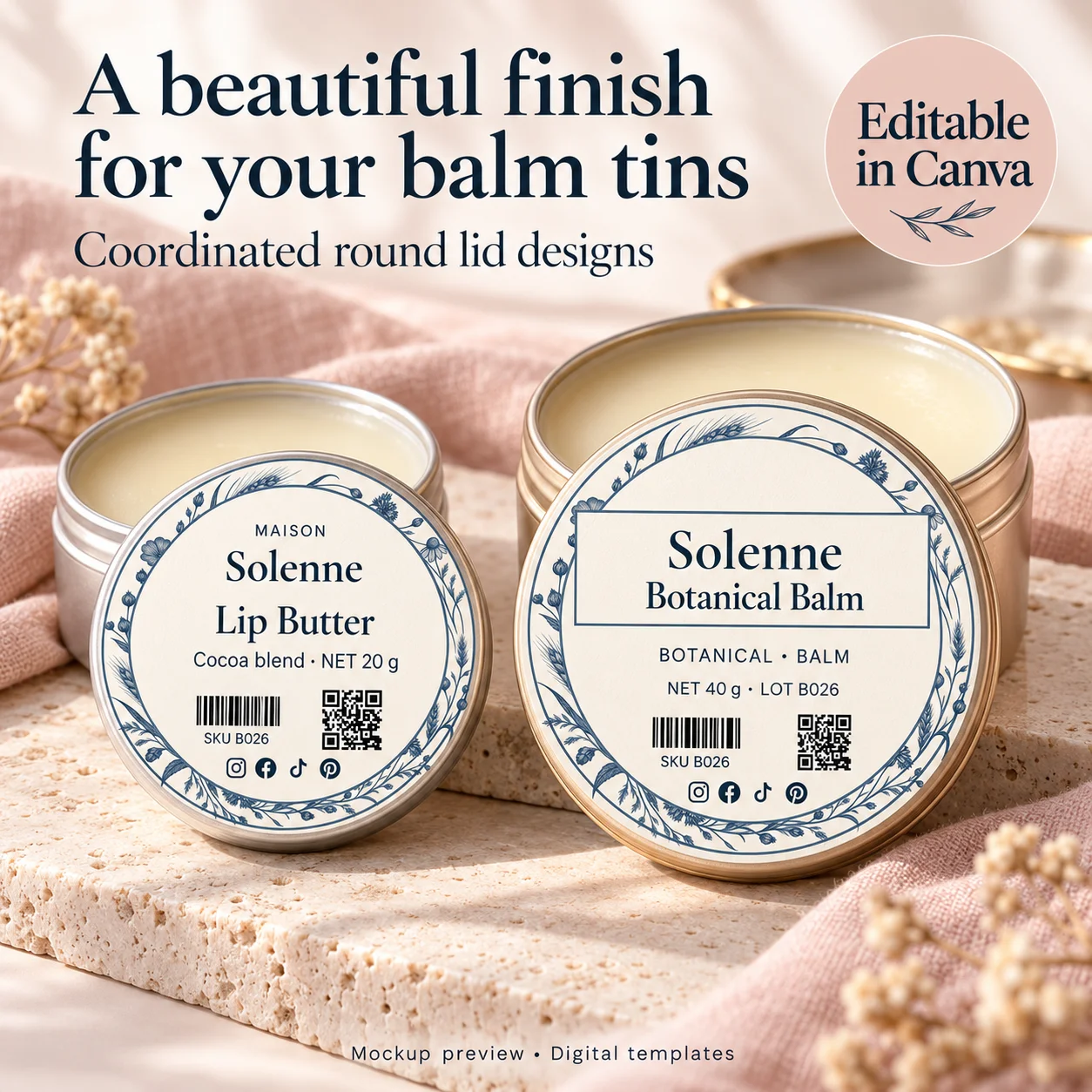
For a round tin, measure the usable flat lid rather than its full outside diameter. A raised edge can make a larger label harder to apply neatly. Test the proposed circle on plain paper, then check whether the design reads well while the tin is held in one hand.
If you use side labels as well, map their relationship to the lid artwork. Avoid putting every detail on both surfaces unless there is a reason. A simple lid identity can work with a separate information label, provided the final package meets the requirements for the product and destination.
05
Proof both the fit and the handling
Print at the intended dimensions, apply one finished label and open and close the package normally. Check that the label stays clear of the cap and base mechanism. Examine the seam, corners and smallest lettering after the package has been handled.
Consider contact with oils or product residue when choosing the material. Keep one untouched control beside the handled sample so you can compare print and adhesive performance. Record the container code and approved label size together; a later change of packaging supplier should trigger a fresh fit check.
BEFORE YOUR NEXT STEP
Your practical checklist
- Measure the fixed body section and circumference.
- Keep caps and mechanisms unobstructed.
- Plan a front panel and a clear seam area.
- Test small lettering and the complete material on the real package.
Questions & answers
Can I use a standard lip balm label size from a template?+
Use it only after comparing its dimensions and shape with your exact tube. Standard-looking containers can have different usable areas.
Can I reduce a large jar label to fit a tube?+
Simple scaling often makes text and artwork too small. Adapt the hierarchy and spacing for the tube instead of shrinking the entire composition.
Check the requirements for your product category and market separately from the visual template.
Sources & further reading
Official references for the technical points in this guide. Check current specifications before production.