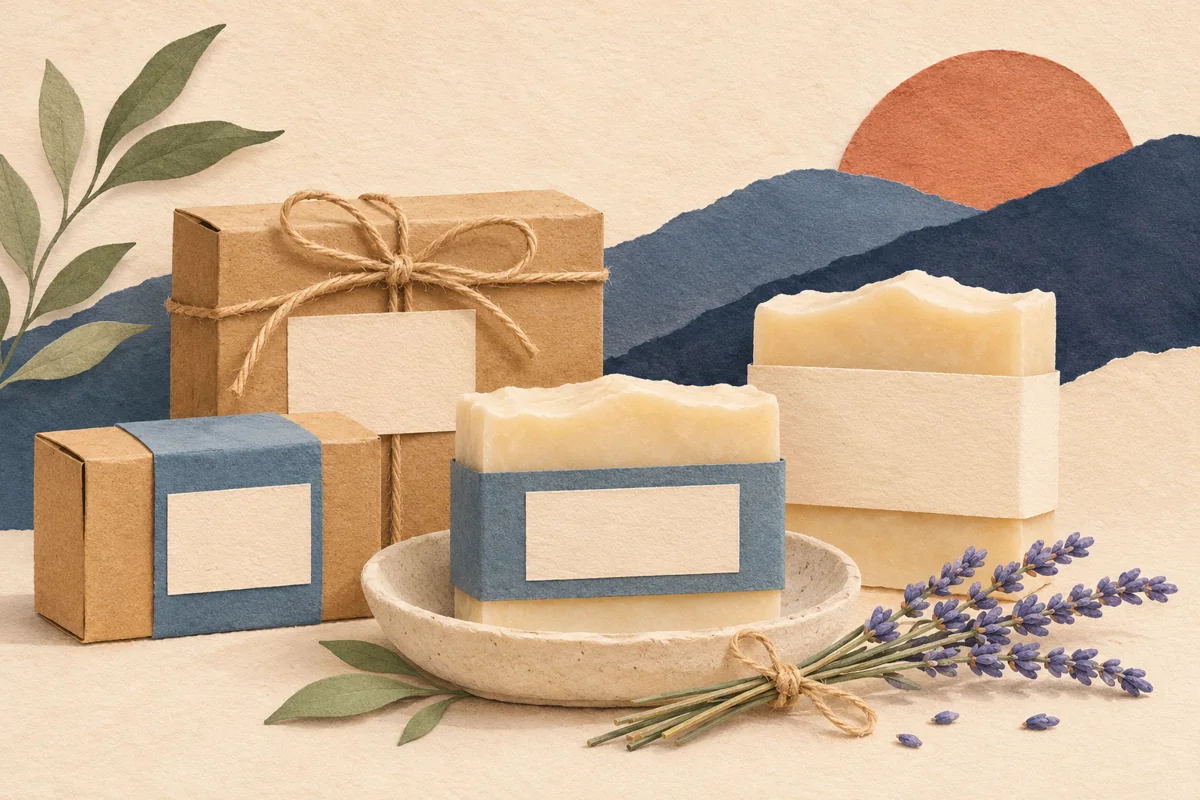
A soap sample may be smaller than the front label you normally print. Shrinking the full-size artwork often leaves a miniature logo and unreadable supporting text. Begin with the job of the sample, then build a simpler information layout for that package.
01
Decide how the sample reaches the customer
A loose sample added to an order needs an identity that stays attached. A discovery set also needs a quick way to compare the samples. Decide whether the piece will travel alone, inside a small sleeve or in a compartment before choosing its label shape.
For example, three narrow sample bars could each sit in a short sleeve with the scent on the front. The outer card can show the same three names in order. Use the sample’s actual shape in your proof because thin offcuts and molded minis can need different arrangements.
02
Build a small-format information order
Start with the product type and scent. Keep the name connected to the wording in your shop, so someone who enjoys the sample can recognize the full-size option. A short collection code can help your packing routine, but it should accompany a recognizable name.
Write the supporting information for the actual product before sizing the artwork. If that information does not fit clearly on a tiny sticker, compare a larger sleeve, a foldout card or an appropriate outer package. Reducing the type until everything fits makes the sample harder to use.
| Sample format | Identity approach |
|---|---|
| Single mini | Name on its own sleeve |
| Three-piece discovery pack | Individual names plus assortment key |
| Order extra | Product name and recognizable maker |
03
Test handling at the smaller scale
Apply a printed proof to one finished sample and handle it by the edges. Small labels can occupy the same area the customer needs to grip when opening the wrapper. Move a label or change the fold if opening destroys the only readable product name.
Set the sample beside the full-size bar and compare the name, color cue and maker. They should look connected even if the sample uses fewer decorative elements. Take a listing photograph of the discovery pack to check whether the names remain distinguishable in a small image.
04
Keep sample stock easy to identify
Store each sample version in a clearly named container at the packing bench. Keep a reference showing which full-size item it represents. This becomes especially helpful when two pale soap bars look similar after their outer cartons have been removed.
Before printing more wrappers, compare the sample name with the current full-size listing and artwork. Check the included dimensions of any digital template you adapt, and keep the small-format master separate from the full-size label file.
BEFORE YOUR NEXT STEP
Your practical checklist
- Choose the sample’s final outer pack.
- Keep the full-size product name recognizable.
- Print the smallest text at actual size.
- Match each sample to a packing reference.
Questions & answers
Can I simply scale down the main label?+
Try a paper proof first. A separate simplified layout often gives the small package a clearer identity.
Can one sample card identify several scents?+
Yes, but each sample should remain distinguishable when the recipient removes it from the card or set.
Sources & further reading
Official references for the technical points in this guide. Check current specifications before production.