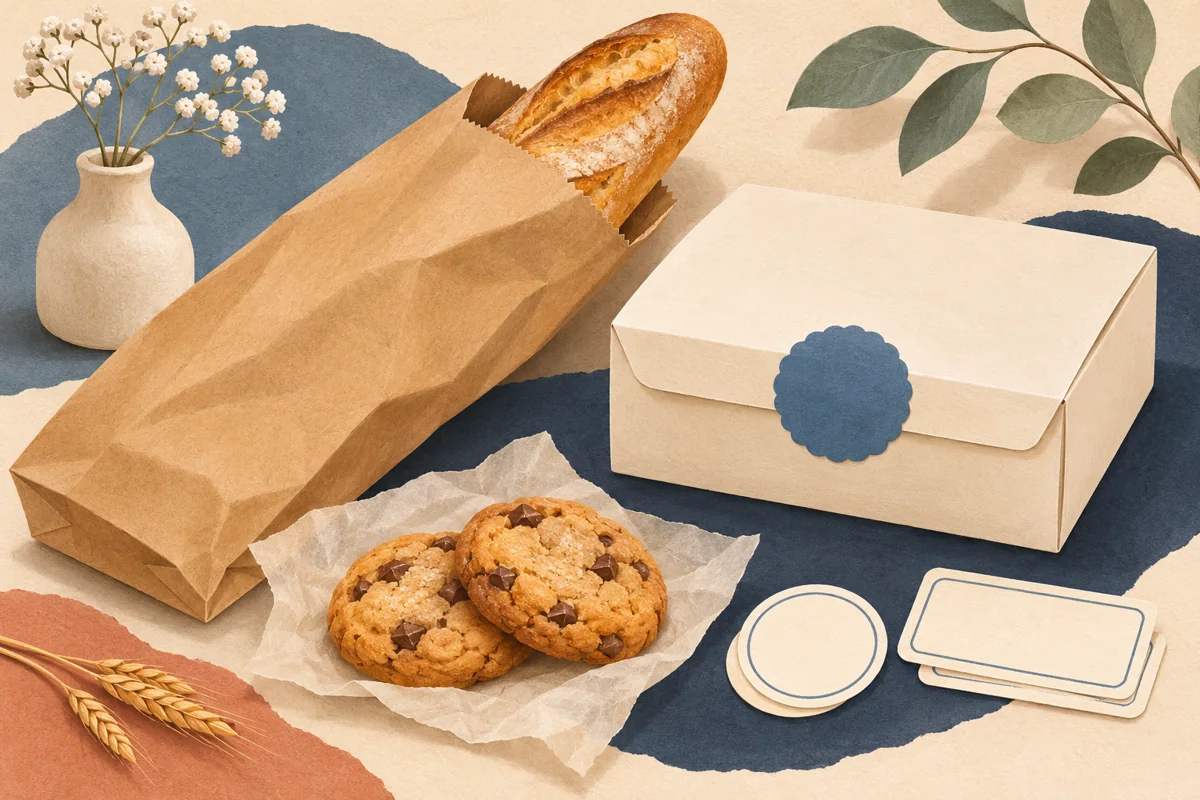
Biscotti packaging has a particular challenge: a long product can fit inside a bag while still looking cramped beside its closure. Dipped ends, uneven lengths and a gift ribbon add more decisions. Plan a sample that shows the product clearly and leaves a reliable place for its name.
01
Choose the viewing direction before the bag
Decide whether the biscotti will stand upright, lie in a gift box or hang from a display. An upright pack needs a readable front at shelf height. A horizontal sleeve needs its name aligned with the way it will be lifted. Draw that viewing direction on the paper packing plan.
ClearBags lists gusseted formats for biscotti and other long treats. Its product descriptions distinguish construction and closure options, so check the exact item rather than assuming every clear bag works alike. A decorative tie and a production closure have different jobs. Confirm the packing method with your packaging supplier.
02
Use a longest-piece fit sample
Imagine a two-piece assortment containing one plain biscotti and one chocolate-dipped biscotti. Arrange both finished pieces in the proposed pack. Check the widest decorated section and the headroom above it. Let the actual closure sit in place before judging whether the bag looks balanced.
Make two paper labels: one low on the front and one as a short upper panel. The low version may leave a dipped end visible; the upper version may be easier to read in a basket. Compare them in the real display rather than holding each package at its most flattering angle.
| Display | Label trial |
|---|---|
| Upright bag | Front panel above basket rim |
| Horizontal sleeve | Name aligned with long edge |
| Mixed gift pack | Assortment name and contents key |
03
Make mixed flavors easy to recognize
A mixed pack can use a single assortment name on the front and a concise contents key elsewhere. Individual packs need their own written flavor identity. Keep those two jobs distinct so a customer can understand whether the package contains one flavor or a selection without opening it.
For a market table, stand a plain, almond and dipped version beside one another. Check whether the flavor words remain visible above the edge of the basket. Avoid placing the only variant identifier on the back seam. Any approved product information must still have enough room to be read comfortably.
04
Check assembly as well as appearance
Ask the person who will pack the orders to assemble a small trial using the chosen paper proof. Note where a hand holds the pack, how the pieces are arranged and whether a label makes the closure awkward. A beautiful mockup can still be slow or inconsistent to assemble.
Keep one approved packed reference with its dimensions and artwork filename. If biscotti length changes, repeat the fit comparison before ordering more printed labels. Digital layouts help coordinate the branding; they do not decide the appropriate food-contact materials, protection or closure for the actual recipe.
BEFORE YOUR NEXT STEP
Your practical checklist
- Measure the longest decorated piece.
- Test the complete count and closure.
- Keep distinctive dipped ends visible.
- Approve a packing-bench reference.
Questions & answers
Should the label cover the whole biscotti bag?+
Only if that supports the intended presentation. A smaller label can preserve a useful product view, provided the required approved wording has a readable place.
Can I choose a bag by length alone?+
No. Compare width, depth, finished product shape and the space used by the closure. Ask the supplier to confirm the pack’s intended use.
Sources & further reading
Official references for the technical points in this guide. Check current specifications before production.