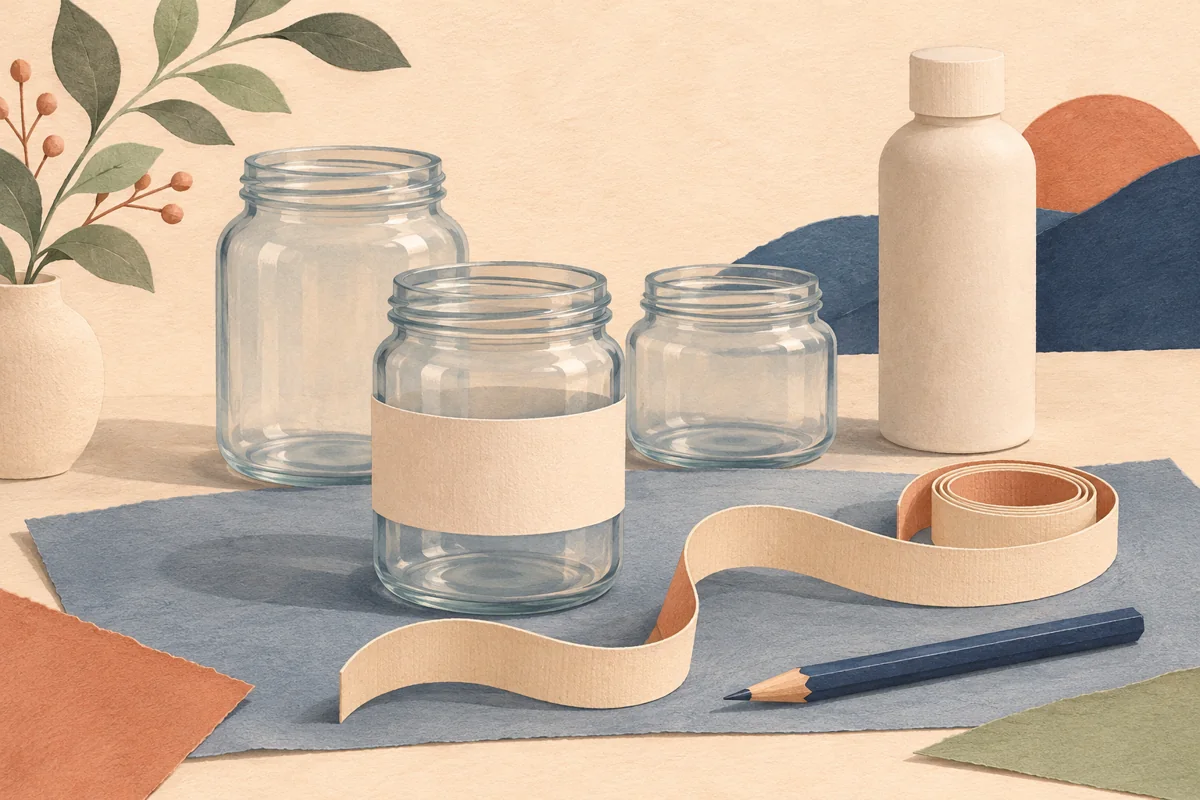
A jar sold under an ounce size does not give you a finished label size. Two vessels in the same capacity range can have different diameters, straight walls and lid profiles. Start a packaging record for the exact jar you are considering so its retail name does not become a substitute for measurements.
01
Keep capacity and outside measurements separate
Write the supplier’s stated capacity exactly as published, including whether the unit describes fluid capacity or intended product fill. Use that information for the product planning decision it actually supports. For packaging, work from the outside dimensions and the physical sample. A capacity figure alone cannot establish how wide or tall a printed label should be.
Create separate columns for the jar body, lid and assembled package. A lid that overhangs the wall can determine the box width even when the label sits on a narrower body. If you are comparing suppliers, keep each model number with its own measurements so similarly named jars do not get mixed together.
02
Mark the usable front panel
Place an empty vessel upright and identify where its wall begins to curve toward the shoulder and base. Use a paper strip between those points. Turn the jar slowly and mark how much of the strip remains comfortably visible from the front. That becomes your first artwork boundary.
For an illustrative jar with a 62 mm straight wall, compare paper fronts 48 and 54 mm high. Keep both below the shoulder and above the lower curve. These are sample proof sizes, not a sizing chart for a named vessel. A printer or container supplier can help check a shape that tapers.
| Measurement | Packaging use |
|---|---|
| Overall assembled width | Choose a box or insert opening. |
| Straight sidewall height | Set the first label proof height. |
| Flat lid inset | Check a separate lid label. |
03
Compare the small and large versions together
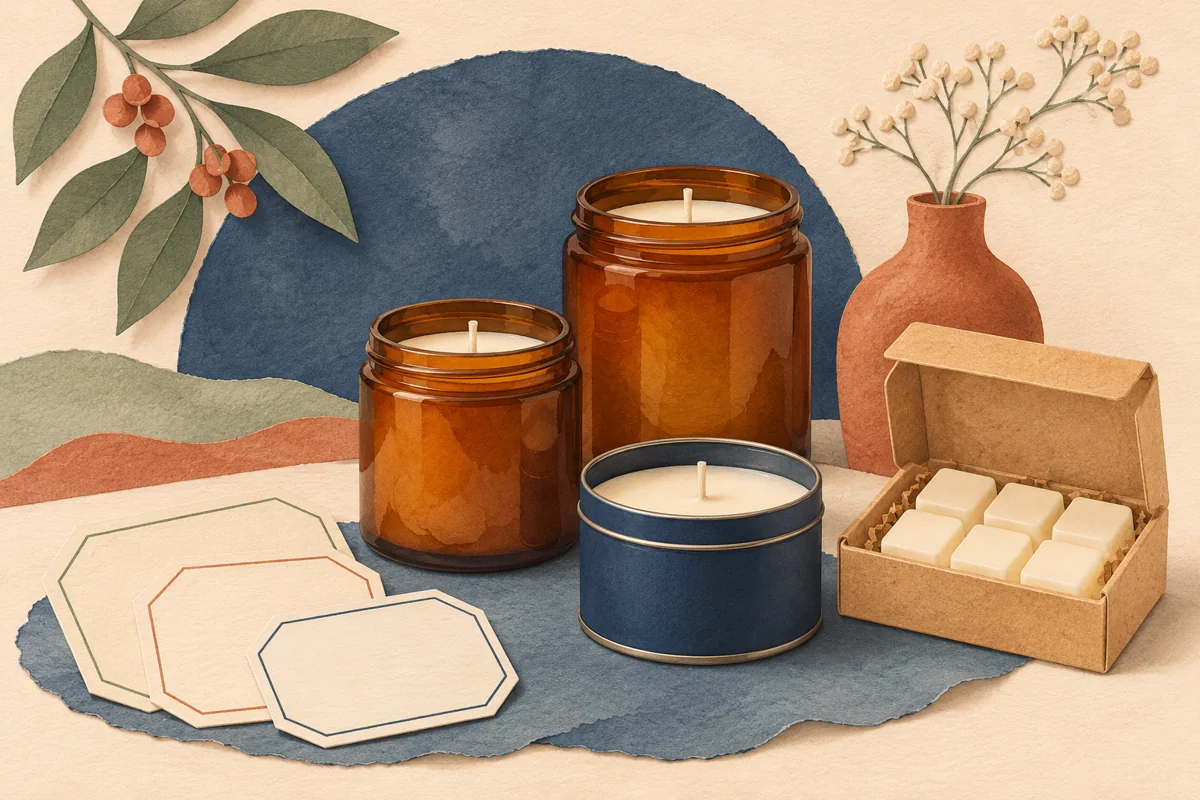
Set the two sizes next to each other with the same label hierarchy. The larger jar can keep the scent name in the same visual position without using an enlarged copy of every element. Print the longest scent name on both sizes before approving a shared style.
Photograph each package at the same viewing angle and compare a small listing preview. Make sure the buyer can distinguish the size option as well as the fragrance. Use the actual product quantity and approved wording on the final design.
04
Preserve the reference when a vessel changes
Keep a plain proof, an approved artwork file and a photo of the assembled jar in one record. Add the supplier, model and closure. When a new order arrives, compare several samples with that reference before printing a full run.
Review the package again when the lid, wall finish or box changes. Even a familiar jar shape can need a new fit check when a different closure or insert is introduced. Matching the design file to the physical model makes repeat orders easier.
BEFORE YOUR NEXT STEP
Your practical checklist
- Record the exact vessel and closure.
- Measure the straight panel independently.
- Proof both size variants.
- Keep the approved package reference.
Questions & answers
Can an ounce size tell me the label dimensions?+
Measure the actual model. The capacity name does not establish the outside width or usable sidewall.
Should I enlarge one label for every size?+
Keep the visual hierarchy consistent, then proof each size separately so the smaller text stays readable.
Sources & further reading
Official references for the technical points in this guide. Check current specifications before production.