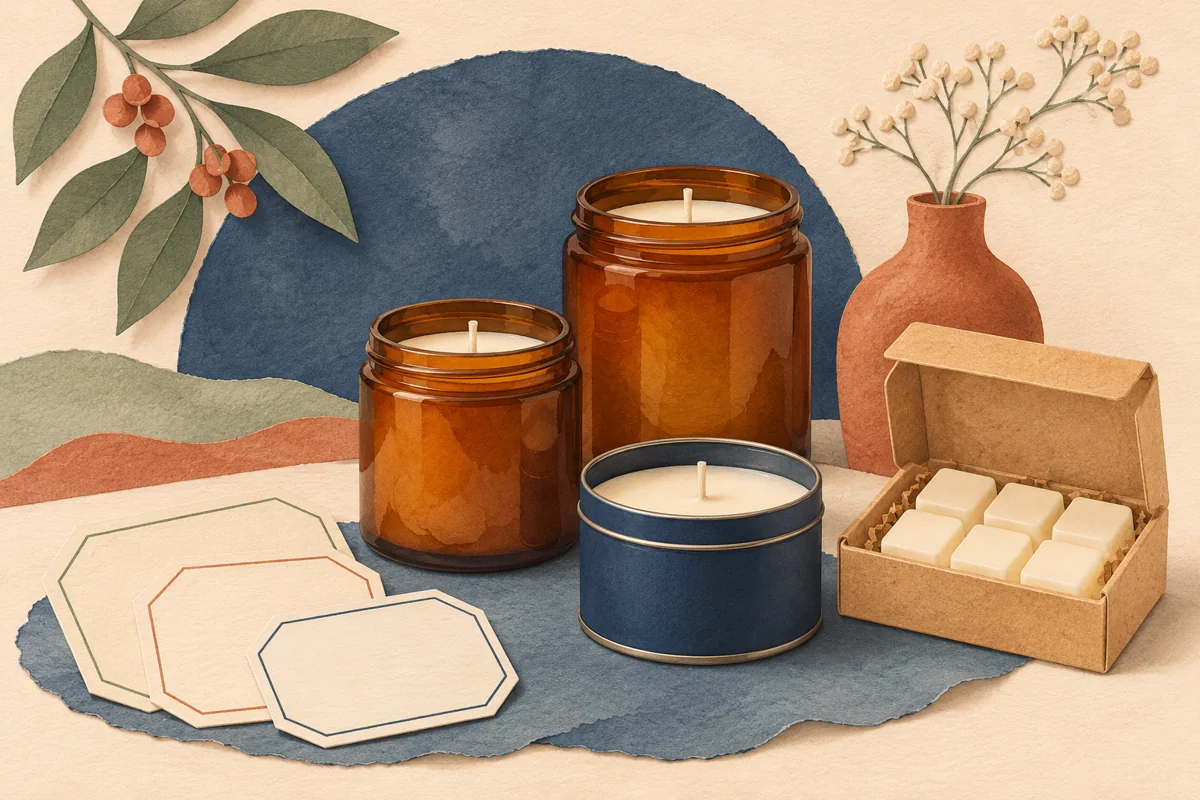
Candle label design has two different jobs: introduce the scent and make the package easy to identify. A jar, a shallow tin and a tall outer box give you very different spaces to do those jobs. Start with the actual container rather than a photograph of a similar one. This guide focuses on the visual layout and production handover for decorative packaging. Any product wording, warnings and market requirements need their own qualified review; an attractive Canva template does not establish that a candle is ready for sale.
01
Map the jar, lid and outer box separately
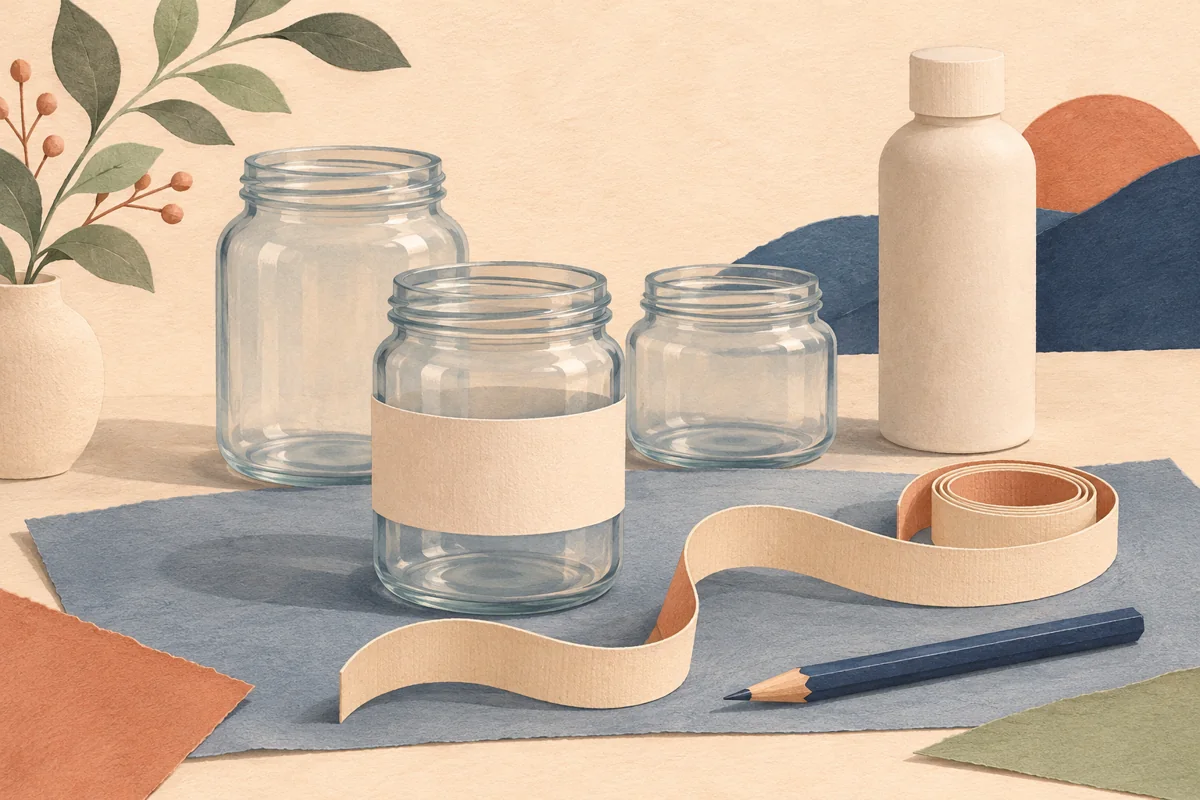
Set an empty jar or tin beside its lid and outer box. Make a paper shape for each potential label position and place it on the package. A front rectangle should not disappear so far around the sides that the scent name becomes difficult to read. A round lid label needs to clear raised rims and any curved edge.
Record width, height or diameter for each position in one unit. Do not infer the label size from the candle's weight or vessel capacity. Keep photographs of the paper mockups with these measurements. Those references help distinguish the decorative front panel from a supporting panel or separate information label when you brief a designer or printer.
02
Give the scent a clear place in the hierarchy
Decide what someone should notice first at normal viewing distance: your brand, the product identity and the scent name. A consistent order makes the range easier to browse. Decorative artwork can support that order, but a thin botanical border should not take the space needed for a long scent name or approved product information.
In a hypothetical three-scent collection, keep the brand at the same top position and give each scent the same central text area. Try the longest name first, such as Cedarwood and Winter Citrus. If that name needs three cramped lines while the shortest needs one, revise the master layout before duplicating it. Do not compress only one variant until it looks unrelated.
03
Plan supporting information before styling every surface
Create a content inventory outside Canva. Separate the decorative front copy from other approved wording, directions, warnings and identification details. Have the person responsible for that information confirm what belongs on each package and how much space it needs. Do not shrink a supporting panel simply to preserve a preferred illustration.
For example, a front label might introduce the brand and scent while a separate approved panel carries longer product information. This is a layout example, not a statement of what is legally required or sufficient. On a small tin, the available space may justify a different decorative format from the matching glass jar. Visual coordination does not require identical dimensions.
04
Specify material and print construction with the supplier
Tell the label supplier what the surface is made from, where the label will sit and what handling or environmental conditions it will encounter. Ask about the exact stock, adhesive and print process together. A digital design file has no material performance rating of its own, and appearance alone cannot show whether a construction is suitable.
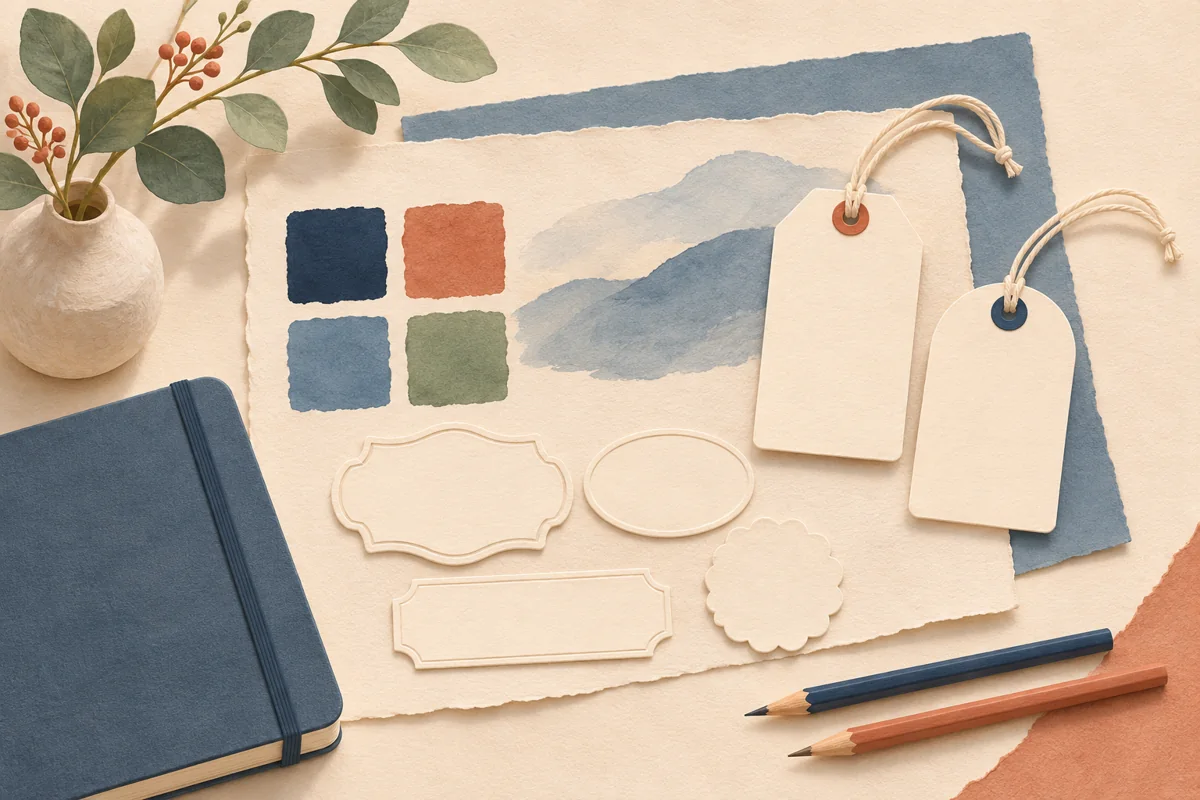
For the print file, follow that supplier's finished-size, bleed and safe-area instructions. Canva guides help with layout, but the selected production workflow determines the final specification. Extend background artwork where bleed is requested and keep essential text comfortably inside the safe area. Avoid promising a universal margin or heat rating for every candle vessel.
05
Approve the entire scent family on real packages
Print a proof at the finished dimensions and apply it to a representative empty vessel. Check centering, readability and the way the edges meet the container. Stand several variants together and look for scent names that are too similar or a label that is visibly higher than its neighbours. Ask your supplier how to evaluate the finished label construction.
Keep a small approval record: container reference, label dimensions, artwork version, stock, printer and date. Save one approved master and individual scent exports with descriptive filenames. When a supplier changes a jar, repeat the fit check rather than assuming the old label still works. The purpose is a repeatable packaging system, not just one appealing photograph.
BEFORE YOUR NEXT STEP
Your practical checklist
- Measure each jar, tin, lid and box label position.
- Test the longest scent name in the master layout.
- Reserve space for separately approved product information.
- Confirm stock and adhesive with the label supplier.
- Keep a physical proof and version record.
Questions & answers
Can I use the same candle label on a jar and a tin?+
Only if the actual usable surfaces suit the same dimensions and the supplier approves the construction. A coordinated design can use different sizes for jars and tins without losing its visual identity.
Does a candle label template include safety wording?+
Check the exact product description. Decorative templates are starting points for design; the seller must obtain and review the product-specific wording and requirements that apply to the product and market.
Sources & further reading
Official references for the technical points in this guide. Check current specifications before production.