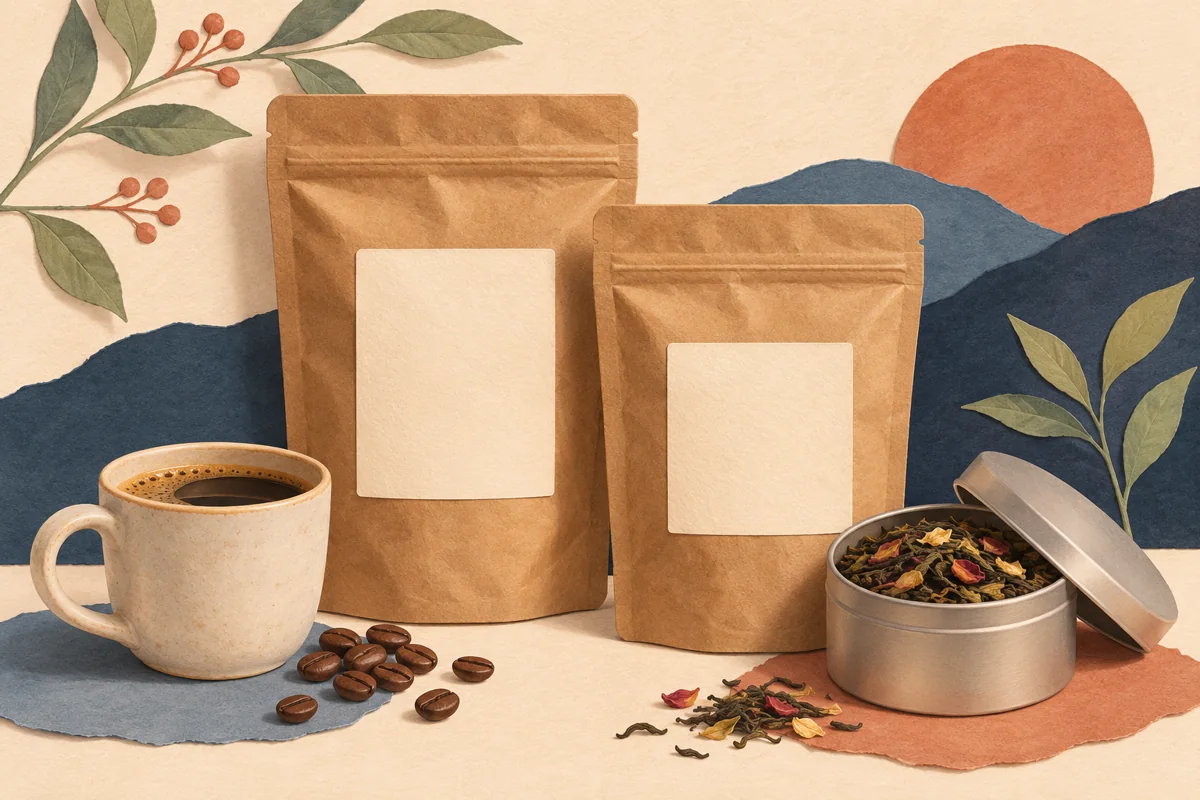
A matcha tin may present a decorative outer lid while an inner closure sits beneath it. That arrangement creates a design question a simple cylindrical mockup does not answer: which information stays with the tin after the lid is removed? Build the label plan around the supplied closure assembly and the business’s actual preparation instructions.
01
Record the tin as an assembled product
MTPak Coffee’s matcha packaging discussion separates visible presentation from the complete tin construction. Avoid turning its packaging examples into a universal specification. Ask your own supplier which lid, inner closure and any separate inner pack belong to the selected tin, then collect a representative sample of that exact arrangement.
On a reference photograph, number each removable part and write down where a label could touch a moving edge. This makes the brief more useful than a single capacity figure. A shallow outer lid can cover a surprising amount of body height, leaving less exposed space than an empty cylinder drawing suggests.
02
Plan information that survives opening
Keep the product name and necessary supporting identity on the body rather than relying entirely on the outer lid. A lid can be set aside while someone prepares a drink. The remaining container should still be understandable without asking the customer to reconstruct a branded photograph from the product listing.
For an illustrative two-product range, compare a plain matcha tin and a blended drink tin with similar colors. Place both open on a table. Ask a reviewer to identify each from the body wording alone. If the distinction disappears once the lids move, revise the body hierarchy before changing decoration.
03
Format approved preparation as actions
Obtain the correct product-specific directions from the business. Divide the wording into the actions the customer must follow, preserving quantities and qualifications exactly. Do not supply universal mixing temperatures or serving amounts merely because a template has a convenient empty instruction box waiting to be filled.
Proof the instructions at actual size and compare them with the maker’s approved source text. If space is limited, discuss a separate instruction card or clearly named information destination. A code may supplement the pack, but the designer should not silently remove wording that the business has said must remain attached.
| Review point | Record |
|---|---|
| List every closure component. | Agreed physical reference |
| Retain body identity when open. | Artwork check and responsible reviewer |
| Use approved preparation wording. | Observation from assembled sample |
04
Check the label against closure handling
Open and close the supplied sample according to its normal use. Watch whether fingers rub the label edge or whether the lid overlaps text when reseated. Record the observation with a close photograph. Adhesion and material suitability should be agreed with the label supplier for the exact coated tin surface.
Save body, outer-lid and instruction artwork as a paired set with the tin reference. Recheck the files if a replacement closure or new preparation instruction is introduced. Editable designs can coordinate the visible range, while tins, liners, filling and any claimed storage performance require their own approved specifications.
BEFORE YOUR NEXT STEP
Your practical checklist
- List every closure component.
- Retain body identity when open.
- Use approved preparation wording.
- Check normal lid handling.
Questions & answers
Can a large lid label replace the body label?+
It can support presentation, but the body should remain identifiable when the removable lid is elsewhere.
Does a matcha-themed template establish storage protection?+
No. Artwork provides presentation. The complete container and packing process need separate supplier evaluation.
Sources & further reading
Official references for the technical points in this guide. Check current specifications before production.