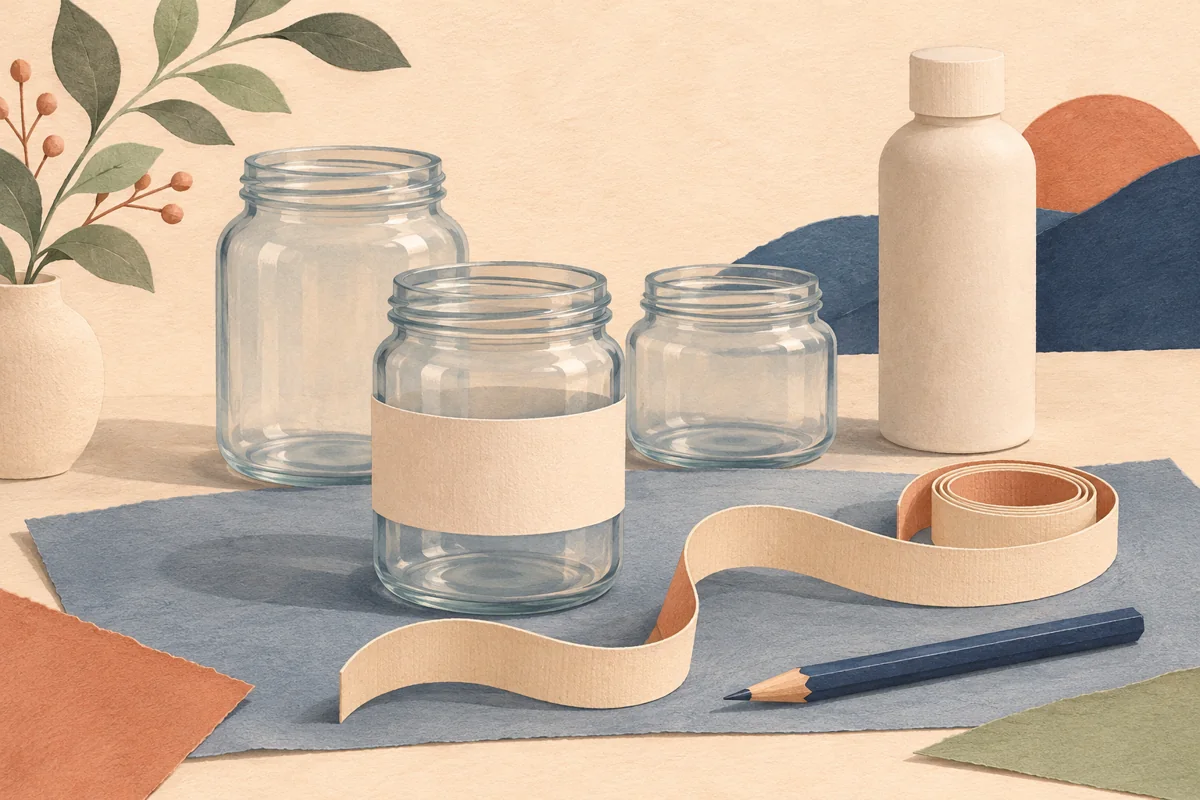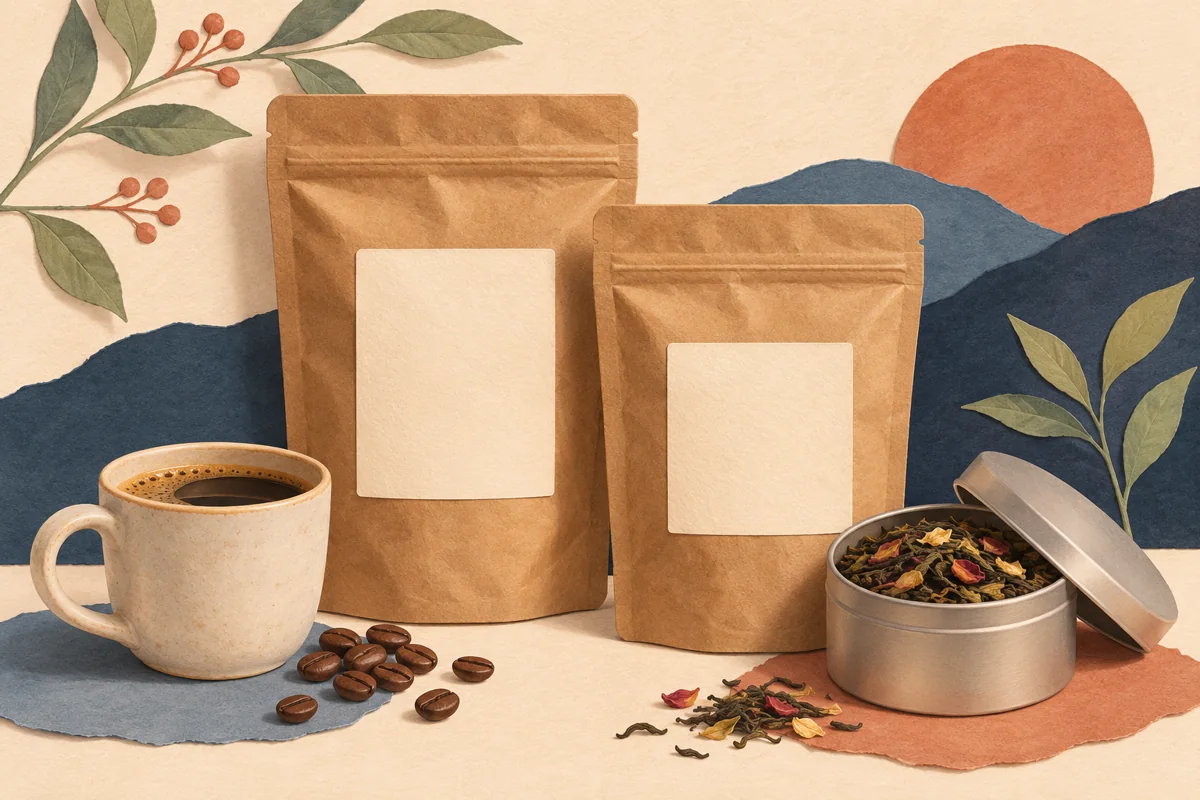
A row of tea tins can look beautifully coordinated while leaving you unsure which lid belongs to which blend. Treat the body and the removable lid as separate surfaces. The useful layout changes when the tins sit on a shelf, inside a drawer or together in a gift box.
01
Decide where the tin will be read
Place the empty tin in its intended display before opening the design file. On a shelf, the front body panel may do most of the work. In a shallow drawer, the top may be the first surface anyone sees. Photograph that normal view and mark the part that remains visible.
For a three-tin example, write Breakfast Blend, Mint Tea and Rose Black Tea on temporary labels. Arrange them in the intended cabinet. Read the longest name from the normal standing position. A decorative lid that looks generous on your desk may be difficult to read beneath a cabinet edge.
02
Give the body a complete identity
Use the body label for the blend name and the supporting product information your finished package requires. A movable lid can become separated from its tin during packing or everyday handling. Repeating the name on the body gives you a direct way to match the pieces again.
If you add a lid label, give it one clear job: quick identification from above. Repeat the written blend name or a consistent short version that also appears on the body. Keep any color code supplementary so similar colors do not become the only distinction between two teas.
| Surface | Main job | Proof check |
|---|---|---|
| Tin body | Identify the complete product | Read on the shelf |
| Removable lid | Identify from above | Match back to the body |
| Gift-box key | Explain the assortment | Use the same blend names |
03
Keep labels out of the lid movement
Inspect the sample for a rolled rim, overlapping lid skirt, seam or embossed detail. Measure the smooth body area with the lid fully fitted. Avery recommends measuring the actual container when choosing a label size. A supplier capacity description does not establish the usable label panel.
Apply a paper proof with temporary tape and open the tin. Look for paper catching beneath the lid edge or crossing a surface that moves. On a lid with a recessed center, keep the proof inside that center rather than stretching it across the surrounding rim.
04
Approve one complete set
Ask the label supplier about adhesion to the exact tin finish, including any coating. Test a printed sample using the application instructions it provides. Open and close the tin in ordinary handling, then inspect the edges and the print. Record the material used and the observations.
Photograph the three tins from the shelf and drawer views. Save the body and lid artwork together with the tin model and measured areas. When adding another blend, insert its actual name and repeat both viewing checks before ordering the rest of the labels.
BEFORE YOUR NEXT STEP
Your practical checklist
- Choose shelf or drawer viewing priority.
- Identify the tea on the tin body.
- Keep the lid movement clear.
- Match the lid name to the body.
Questions & answers
Can I put the tea name only on the lid?+
A lid can be moved to another tin. Repeating the name on the body makes matching and identification easier.
Do all tins with the same capacity take the same label?+
No. Height, circumference, lid overlap and surface details can differ. Measure your exact sample.
Sources & further reading
Official references for the technical points in this guide. Check current specifications before production.