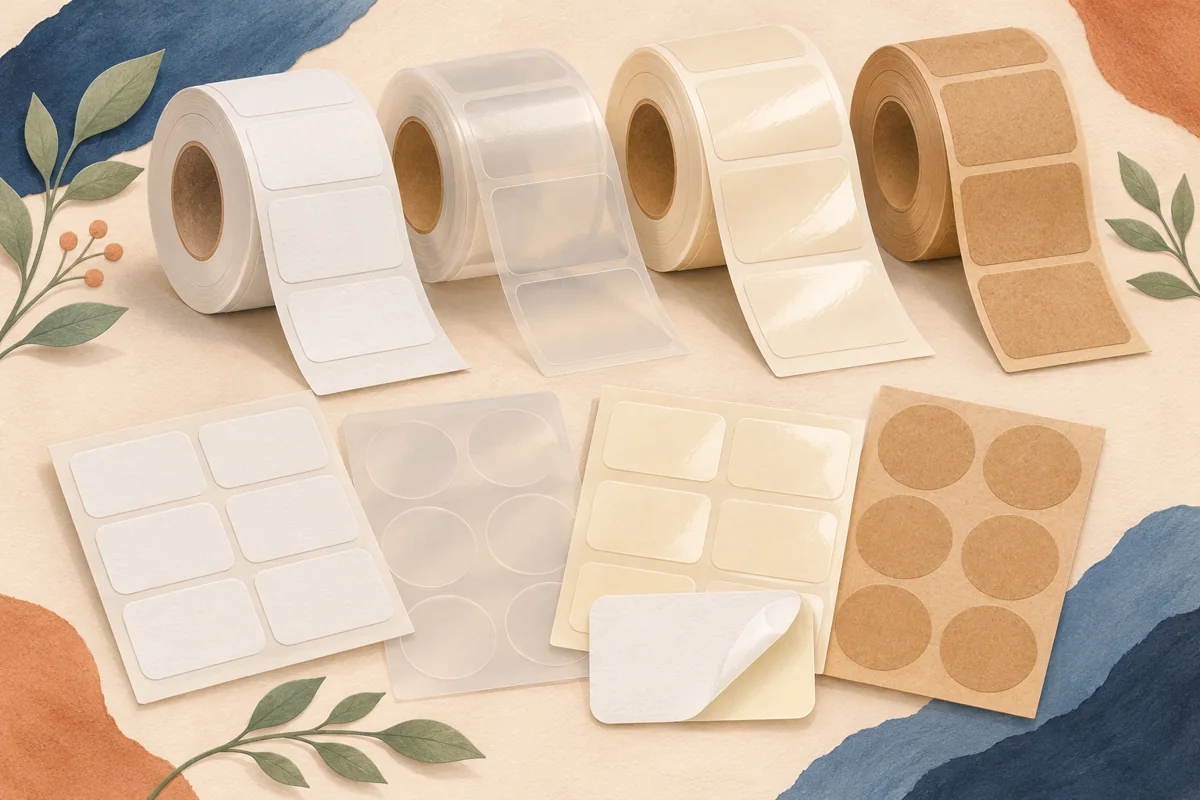
A spot-gloss detail creates a different reflection from the surrounding label. It can emphasize a name or illustration without making the whole surface glossy. The design question is where that contrast helps the package, and the production question is how the chosen printer needs the selective finish identified.
01
Define the contrast you want to create
Start by deciding what should look different under changing light. A gloss pattern on a matte background gives a different result from a gloss brand name surrounded by printed botanical detail. Choose the role before choosing the area. The product identity should still be understandable when the highlight is not reflecting toward the viewer.
For a room-spray carton label, compare selective gloss on the leaf motif with gloss on the brand wordmark. Keep the scent and volume in regular print. Use one controlled layout for both versions so the approval discussion focuses on the treatment rather than unrelated changes.
02
Check the supplier’s process vocabulary
Suppliers may describe different varnishes and coatings under similar finish names. Ask what the requested “spot UV” option actually applies, which base materials are eligible and whether a full-surface coating is also part of the construction. Keep that wording in the quote and purchase record.
Avery’s premium roll-label guide, for example, gives specific artwork and base-finish requirements for its own spot-gloss option. Those are not universal instructions for every printer. Obtain the current file specification for your order, including how the selective area should be separated from ordinary artwork.
03
Make a finish map that cannot be misread
Supply a color artwork reference and a second marked reference showing only the intended gloss area. Name them so the printer can distinguish appearance from production instructions. If prepress changes a thin line or a small gap, review the updated map before approval.
Think through the outside edge of the finish as well as the center. A narrow decorative frame can make a small registration difference more visible than an isolated emblem. Ask the printer which treatment is practical and whether a larger gap from nearby elements would produce a clearer result.
| Review item | Reason to inspect it |
|---|---|
| Gloss boundary | Shows where finish should stop |
| Small gaps | May need process-specific adjustment |
| Base finish | Creates the surrounding visual contrast |
04
View the sample in ordinary use
Tilt the labeled bottle under the light used for your product photographs, then examine it straight on. Check that a reflection does not compete with the scent name. Review a shelf-height view as well as a close photograph, because the effect may be subtle at one angle and strong at another.
Archive the approved construction with the artwork version. If you later change the material or base laminate, treat that as a reason to review the finish again. Your editable template can establish the layout, while the printer provides the coating and production preparation.
BEFORE YOUR NEXT STEP
Your practical checklist
- State which selective gloss process is quoted.
- Provide an unambiguous finish map.
- Review small details with prepress.
- Approve the effect over the actual base finish.
Questions & answers
Does spot UV mean the whole label is glossy?+
It usually describes a selective gloss treatment. Ask the supplier which areas receive it and what finish covers the rest of the label.
Can I identify the gloss area with a screenshot?+
A marked screenshot can support the discussion, but the supplier must confirm whether it can prepare the required production separation from that reference.
Sources & further reading
Official references for the technical points in this guide. Check current specifications before production.