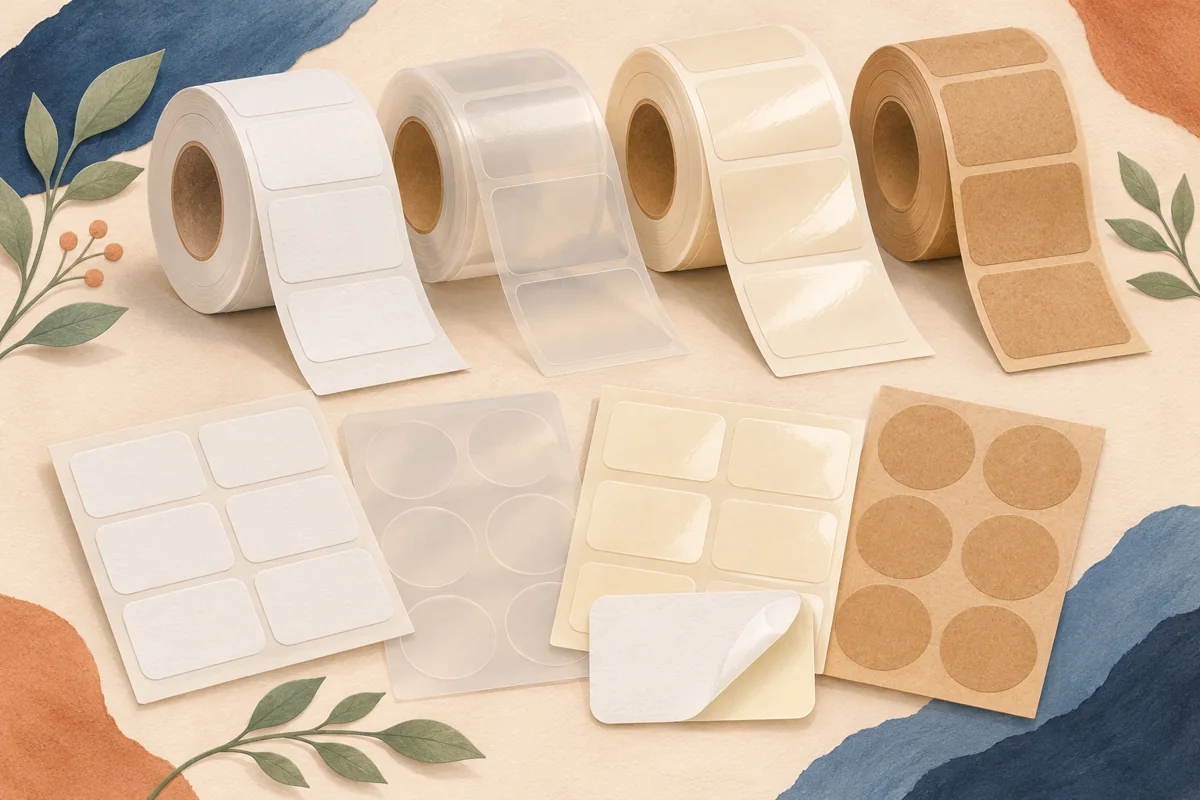
A soft-touch label is a tactile choice. A flat screen image may resemble an ordinary matte finish even when the physical samples feel different. If touch matters to the product presentation, your decision needs a sample you can handle and an exact description of the construction the printer will supply.
01
Ask for a matched finish comparison
Use the same artwork and similar base material for the first comparison whenever the supplier can provide it. Otherwise, record every difference between samples. A darker ink, thicker paper or different container can influence the impression and make it harder to decide what the soft-touch finish contributes.
For an illustrative candle jar, label two empty vessels with the same front design. Identify the sample finishes discreetly underneath. Ask a small review group which surface they can describe and which package is easier to read. Treat those comments as design feedback, not proof that either finish will increase sales.
02
Identify the actual finish construction
Blue Label’s material references list soft-touch laminate among its available sample constructions. Other suppliers may use a coating or a different named product. Record the base stock, print process and finish together, and ask whether the sample represents the exact construction being quoted.
Explain how the product will be packed and handled. If labels will rub against dividers or neighboring jars, ask the supplier for a suitable performance recommendation and an appropriate sample trial. Do not infer durability from the pleasant feel or from the appearance of a similar label.
03
Check whether touch supports the design
A restrained label may gain a tactile focal point without adding another graphic. That does not mean the finish should replace clear hierarchy. Keep the scent and maker name readable and compare the package under the lighting used for the shop photographs. A finish customers cannot feel online still needs an accurate visual presentation.
Describe the finish plainly in your own product copy if it applies to a physical product you actually sell. Avoid confusing that description with the contents of a digital template purchase. A design file can show the intended layout without including a specialty printed label.
| Comparison | Record |
|---|---|
| Touch | How reviewers describe each surface |
| Visibility | Whether words stay clear at normal angles |
| Handling | What happens during the chosen packing trial |
04
Approve a repeatable specification
Keep the supplier’s material code or finish identifier alongside the approved physical reference. If a later order substitutes a different laminate, ask for a new sample rather than accepting the shared adjective “soft” as evidence of an identical result.
Include the finish in the reorder brief and confirm lead time and quantity requirements with the supplier. This closes the gap between a pleasing sample and a repeatable production order, while keeping your editable artwork available for later wording or variant changes.
BEFORE YOUR NEXT STEP
Your practical checklist
- Compare soft touch with a matched matte sample.
- Record laminate or coating construction.
- Review normal viewing and handling conditions.
- Retain a finish identifier and approved sample.
Questions & answers
Is every matte label a soft-touch label?+
No. Matte describes a visual finish, while soft touch describes a particular tactile effect. Compare actual samples rather than relying on photographs.
Does soft touch make a label waterproof?+
The name does not establish that performance. Ask about the complete stock, adhesive, print and finish construction for your intended conditions.
Sources & further reading
Official references for the technical points in this guide. Check current specifications before production.