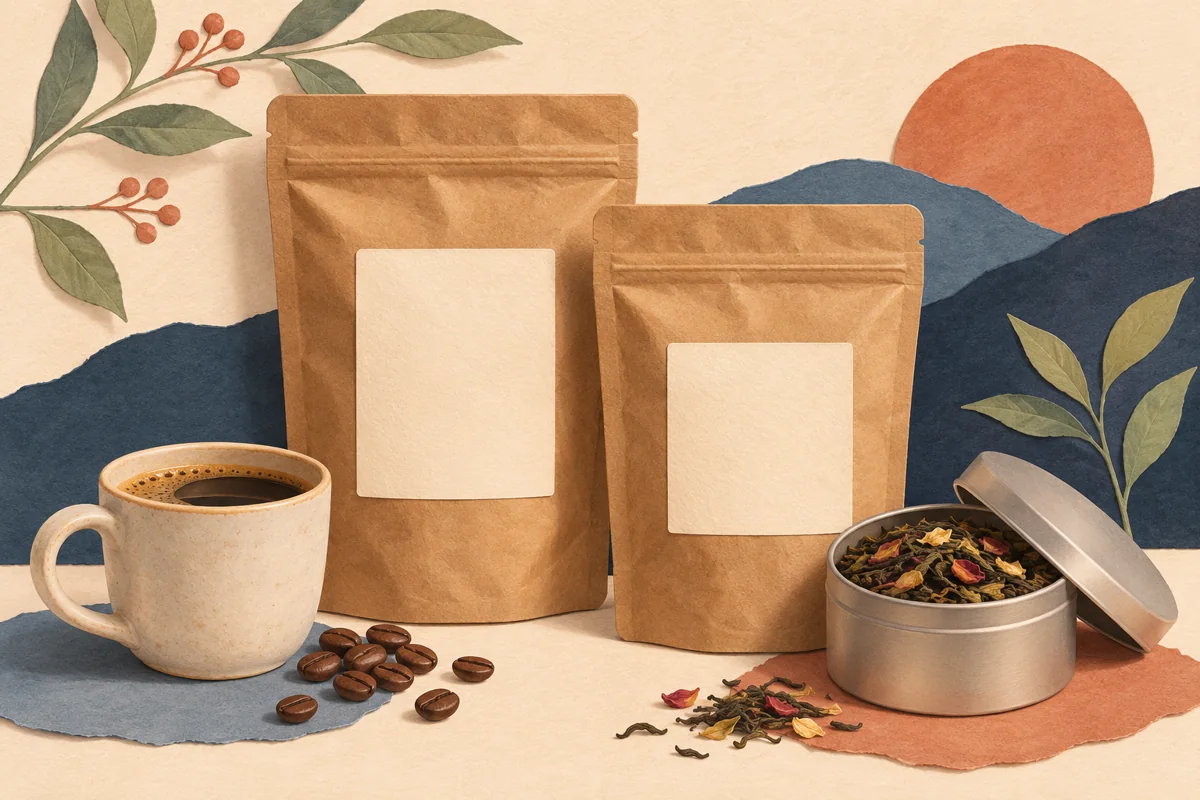
A tea sampler can contain several small packs that look almost identical once they leave the box. Give every blend a clear identity and make the outer key easy to follow. The most useful packaging tells the recipient what they are choosing at the moment they pick up a sample.
01
Choose a clear assortment structure
Group the set around a real distinction such as the maker’s selected blends or a deliberate range of styles. Use accurate names from the product record. An imaginative title can introduce the set, while the individual pack still needs its own recognizable blend name.
For an illustrative four-pack box, write the four product identities before planning the decorative cover. If one sample contains individual tea bags and another is loose leaf, make that difference explicit. Keep any supplied directions attached to the correct product version.
02
Compare the inner packs after filling
Tea density can differ across blends, so matching nominal weights do not establish identical package shapes. TricorBraun Flex notes that packaging tea involves differing densities. Ask the supplier for appropriate samples and compare the final filled packs rather than assigning a shared pouch solely from a weight estimate.
Place a paper label below each closure and review the front-facing area. A bulky leaf shape may make one pouch rounder than another. If the labels wrinkle differently, adjust the panel size or package choice before extending the artwork across the assortment.
| Piece | Information that helps |
|---|---|
| Inner pack | Blend name and relevant product format |
| Assortment key | A matching sequence and short distinctions |
| Outer package | Set identity and maker |
03
Make the key work without the box
Use the same blend names on the card, shop page and packs. A small number or accent can help people navigate a sequence, but pair it with written identity. Move one pack out of the arrangement and ask whether the key still makes sense.
Keep the card readable at its printed size. Divide the notes into one short entry per blend and leave room around each name. If you link to longer product information, label the destination clearly and test a printed code before producing all the inserts.
04
Create a repeatable packing reference
Photograph the approved open sampler with the packs in the intended order. Add the blend count and arrangement to the packing list. When replacing a blend, update the key before packing the new combination so the outside description matches the contents.
Close and open one complete sample using the actual wrap and divider. Notice if the card moves below the packs or if a label becomes hidden. Choose the position that lets the recipient identify the assortment before pulling everything out.
BEFORE YOUR NEXT STEP
Your practical checklist
- Define the assortment structure.
- Check filled pack shapes.
- Match names on packs and key.
- Photograph the approved open set.
Questions & answers
Can loose-leaf and tea-bag samples share one box?+
Yes, when the package is suited to each product and the format of every sample is clear to the recipient.
Can the template provide preparation directions?+
Use directions appropriate to the tea you supply. Template text and example fields need to be checked against that actual product.
Sources & further reading
Official references for the technical points in this guide. Check current specifications before production.