Small Business Packaging Ideas on a Budget
Build cohesive small-business packaging by simplifying your range, standardizing label decisions and testing costs before ordering in bulk.
Read the guideTHE HERDIGITALART GUIDE LIBRARY
Organize product variants, packing records, costs and wholesale information. Use practical worksheets and examples to turn a consistent design into a repeatable packing workflow.
43 practical guides
Build cohesive small-business packaging by simplifying your range, standardizing label decisions and testing costs before ordering in bulk.
Read the guideDocument label dimensions, print files, materials and placement in one practical packaging guide. Keep the approved version connected to production.
Read the guideCalculate the full cost of a finished package, including labels, inserts and waste. Use a worked example to compare two packaging options fairly.
Read the guideBuild cohesive small-business packaging by simplifying your range, standardizing label decisions and testing costs before ordering in bulk.
Read the guideCreate a consistent gift-set label system across outer boxes, individual products and inserts, with clear contents and practical packing checks.
Read the guideKeep Canva label masters, product variants, approval records and print exports organized with a simple naming and release workflow.
Read the guidePlan seasonal label variations with stable brand elements, controlled artwork changes and a practical print quantity and approval process.
Read the guide
Build a small-batch label cost worksheet that includes proof sheets, supplies, rejected labels and setup time instead of comparing headline unit prices.
Read the guidePlan a clear market table for jars, bakery boxes and handmade goods. Test product groups, readable prices and an easy place to pay.
Read the guide
Create a useful packaging mockup with real label artwork. Check scale, viewing angles and variant differences, then compare it with a physical proof.
Read the guideWrite a clear thank you card for a handmade product order. Plan the message, support details and optional link without crowding the printed insert.
Read the guideCompare care, identification and reorder inserts for handmade products. Plan the information, placement and print quantity around your packing routine.
Read the guidePlan rounded rectangle labels by finished dimensions and corner radius. Check text clearance, border appearance and fit on the actual package before ordering.
Read the guideUnderstand vector paths, pixel images and mixed PDFs when preparing label files. Check effective image resolution and preserve clean artwork through export.
Read the guidePlan a tamper-evident seal around the actual closure and a clear opening path. Compare security construction with decorative sealing stickers.
Read the guideAdapt one candle label system to narrow and wide vessels. Check scent hierarchy, size identification and front-facing text without scaling every element.
Read the guideCalculate the full cost of a finished package, including labels, inserts and waste. Use a worked example to compare two packaging options fairly.
Read the guidePlan label quantities around products, variants and expected changes. Separate proofs, front and back labels, spare stock and reorder timing.
Read the guidePhotograph jars, bottles and boxes so the product name remains clear. Control glare, label angle and thumbnail crops with a repeatable shot list.
Read the guideArrange label sheets, jars and packaging in a clear overhead photograph. Plan depth, spacing and crops so the image shows what the buyer needs.
Read the guideDocument label dimensions, print files, materials and placement in one practical packaging guide. Keep the approved version connected to production.
Read the guideCreate a naming system for flavors, scents and sizes that matches packaging, listings and packing lists. Use a variant matrix to catch mismatches.
Read the guideDesign a readable gift message card with space for names, line breaks and handwritten notes. Test long messages before adding the card to an order.
Read the guidePlace a thank you sticker where it adds a clear finishing touch. Test tissue folds, outer bags and box openings without hiding product information.
Read the guide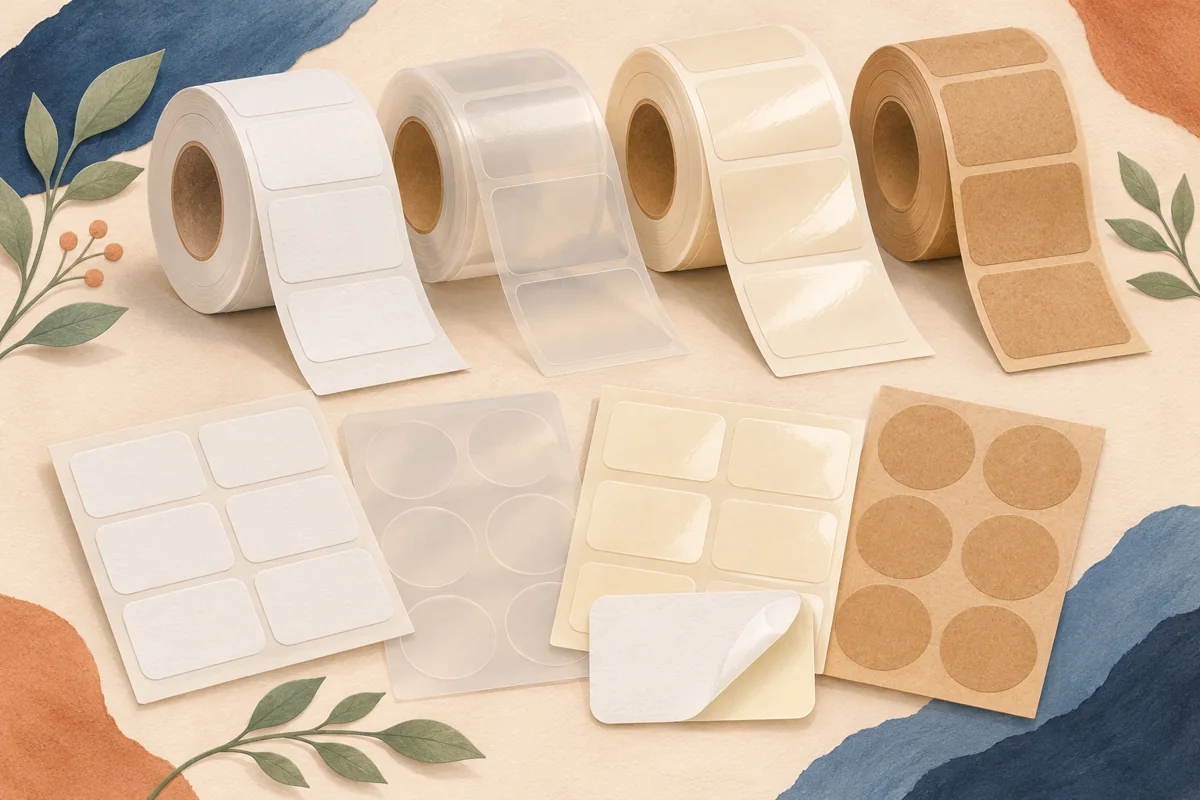
Compare clear label finishes on the actual filled container. Check edge visibility, background contrast and the appearance of unprinted areas.
Read the guideImprove packaging readability with contrast, explicit variant names, a physical reading test and an accessible online information route.
Read the guidePlan shipping box branding with a clear carrier-label area, restrained decoration and a repeatable packing sequence.
Read the guideCompare label sheets and rolls using printing method, variant handling, application equipment and the way your products move through the packing bench.
Read the guideAudit your product labels across real containers, shop images and packing files. Prioritize identity, readability and consistency with a practical scoring sheet.
Read the guideWrite neutral packaging survey questions about opening, identification and storage. Connect feedback to a specific decision without treating a few replies as market proof.
Read the guideCompare two packaging versions with a clear hypothesis, consistent conditions and a useful outcome. Separate usability observations from evidence of a conversion change.
Read the guideKeep product codes, label revisions and packing instructions synchronized. Use a change record to prevent an updated design reaching only part of the package.
Read the guideDesign a wholesale line sheet buyers can use to compare variants and place an accurate order. Connect photographs, product codes, prices and case-pack details.
Read the guideCreate a product information sheet with usable measurements, case details and approved descriptions. Keep retailer data aligned with your labels and wholesale line sheet.
Read the guidePlan readable craft fair price signs for singles, bundles and mixed variants. Match the sign to the actual package and test it from the shopper’s position.
Read the guideDesign an insert for a discovery pack with a clear contents key, approved product information and a useful reorder route. Keep tiny samples identifiable after unboxing.
Read the guideCalculate a practical reorder trigger for labels, cartons and inserts. Separate available stock, supplier lead time and uncertainty from the quantity you eventually order.
Read the guideOrganize finished label stock with clear locations, usable counts and revision status. Prevent similar variants and obsolete artwork from mixing at the packing bench.
Read the guidePlan seasonal labels, proofs, suppliers and packing deadlines with a backward calendar. Identify dependencies before a gift collection’s launch date arrives.
Read the guideMeasure packing steps to find avoidable searching, rework and bottlenecks. Use a repeatable observation sheet without turning one fast sample into a productivity target.
Read the guideCreate a clear size diagram for a label, container or finished package. Distinguish artwork dimensions, usable panels and product capacity without misleading scale.
Read the guideManage a packaging refresh while existing labels, cartons and listing photos are still in circulation. Define compatible components and a clear release point.
Read the guideStructure a product QR destination around identification, approved directions and the correct reorder link. Keep the page useful after the printed package is opened.
Read the guideRequest label, carton or pouch samples with the container, intended use and proof questions clearly explained. Distinguish material swatches from a custom printed production sample.
Read the guidePlan a hang tag around its actual hole, fastener and hanging position. Check front-and-back clearance with a full-size sample before approving print.
Read the guidePlan a bag topper around the fold, attachment area and filled-bag shape. Separate fold-over cards from insertable headers before setting artwork dimensions.
Read the guide